
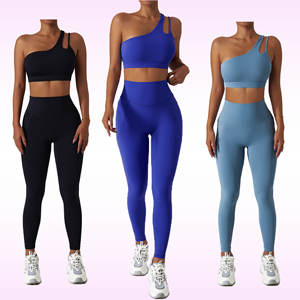
Bridging global manufacturing excellence with Tokyo’s uncompromising standards for textile performance, body ergonomics, and zero-defect fabric integrity.
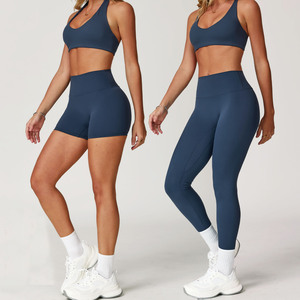
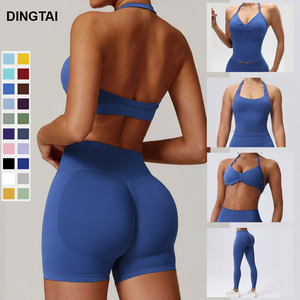
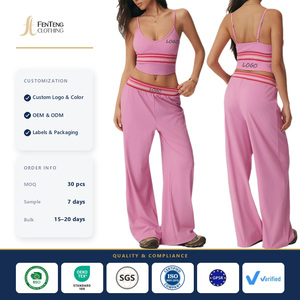
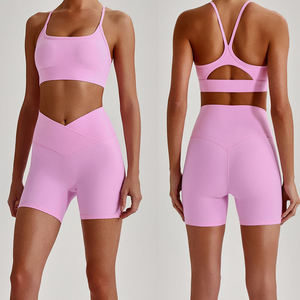
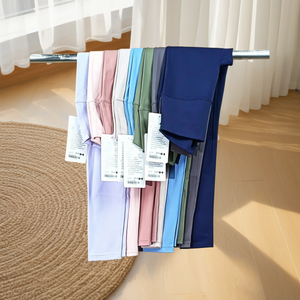
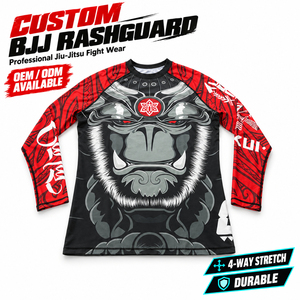
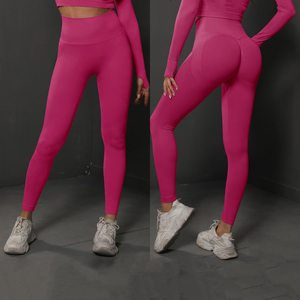
The global performance apparel ecosystem is experiencing an architectural transition from planar cut-and-sew manufacturing to single-cylinder seamless circular knitting. Traditional garment construction relies heavily on cut-and-sewn 2D panels joined by high-density flatlock or overlock stitching. In performance-intensive environments, these joints act as stress concentration nodes, introducing frictional drag, micro-abrasions along sensitive dermatological lines, and inevitable structural seam fatigue under cyclic shear strain.
Operating dedicated Santoni Top2V circular knitting machines equipped with 28-gauge electronic needle selection systems transforms this dynamic. Yarn packages—principally micro-denier Polyamide 6.6 combined with core-spun air-jet covered Elastane (Spandex)—are fed tangentially into an eight-feed continuous rotary cylinder. This enables zoned compression modeling, structural jacquard venting, variable rib stabilization, and micro-mesh air channels to be co-knitted directly into a single continuous tube. For Tokyo-based athletic and fashion apparel houses requiring unyielding dimensional precision, seamless circular knitting eliminates side seam skewing, achieves isotropic four-way elasticity, and cuts production cutting fabric scrap by up to 35% compared to conventional markers.
Engineered for specific climate shifts, urban lifestyle demands, and specialized physical conditioning across Tokyo's premier cultural districts.
In high-density fitness hubs across Minami-Aoyama, Roppongi, and Ebisu, boutique Pilates, reformer barre, and hot yoga studios require butter-soft skin contact with absolute opacity (squat-proof density). Our Santoni gauge-28 circular knit matrices eliminate crotch chafing and pressure points during technical isometric holds, satisfying discerning Tokyo fitness practitioners.
Tokyo’s distinctive urban transit lifestyle—navigating rail junctions between Shinjuku, Ginza, and Omotesando—demands transitional athleisure. Seamless rib-knit sports bras and Y2K-profile flare leggings offer moisture-wicking thermo-regulation, providing comfort during summer train transfers and winter heated interiors without bulky visible seams.
Within Tokyo's competitive Brazilian Jiu-Jitsu (BJJ), Judo, and high-intensity hybrid training spaces in Meguro and Ikebukuro, apparel must withstand extreme tensile torque. Our reinforced seamless rashguards and multi-filament compression bottoms deliver dynamic kinetic stabilization and anti-microbial yarn options to handle rigorous physical contact.
A quantifiable assessment for Tokyo sourcing managers comparing circular knitting parameters against traditional cut-and-sew lines.
| Functional Specification | Santoni Seamless Circular Knitting (Overfit Standard) | Standard Cut-and-Sew Assembly |
|---|---|---|
| Seam Density & Chafe Points | Zero lateral seams; tubular knit integrates waistband and contour ribs | 4-to-6 longitudinal flatlock seams prone to skin shearing |
| Compression Gradient Execution | Variable tension programmed per course via electronic stitch cams | Fixed elastic bands stitched onto flat-cut panels with seam bulk |
| Micro-Ventilation Placement | In-knit jacquard eyelets & eyelet mesh without cutting or perforating | Laser cut holes or sewn-in mesh inserts creating weak tear borders |
| Fabric Waste Ratio (Pre-consumer) | < 5% (Yarn directly formed into shaped garment tubes) | 18% – 25% (Marker cut loss from flat planar knitted rolls) |
| Sizing Repeatability & Tolerance | +/- 0.5 cm strict gauge control across production batches | +/- 1.5 cm dependent on manual fabric layering and cutter deviation |
Procurement executives and private-label founders across Tokyo are redefining their supply partnerships in response to several structural market movements:
1. The Surge in Quiet Luxury Athleisure: In districts such as Daikanyama and Ginza, hyper-branded aesthetic motifs are giving way to refined tactile luxury. Consumers prioritize subdued matte finishes, sophisticated neutral palettes (ash grey, deep matcha, muted taupe), and refined surface touch. This shift benefits circular seamless fabrics knitted with dope-dyed air-textured Polyamide 6.6 yarn, which yields a peach-fuzz velvety handfeel that resists pilling after frequent home laundering.
2. Stringent Quality Assurance & B-to-B Defect Intolerance: Japanese retail frameworks, governed by the Household Goods Quality Labeling Act and JIS (Japanese Industrial Standards), enforce rigid testing protocols regarding colorfastness (JIS L 0844), dimensional stability against washing (JIS L 1096), and tensile bursting resistance. Tokyo brand directors favor manufacturers who maintain closed-loop, in-house knitting facilities where yarn tension, machine calibration, and needle wear are continuously monitored on the shop floor.
3. Demand for Shorter Sampling Intervals: The fast pace of Tokyo fashion drop calendars cannot tolerate 4-to-6-week prototype development cycles. By controlling our 20 Santoni Top2V machines directly with in-house electronic programming, we compress technical sample development to 5–7 days. This agility allows Tokyo merchandise managers to iterate fitting revisions rapidly ahead of seasonal buying presentations.
Direct manufacturer operations delivering technical consistency, certified materials, and flexible minimum orders.
Unlike wholesale traders or sourcing intermediaries, we own and manage an active facility equipped with 20 Santoni Top2V gauge-28 machines in Beylikdüzü, İstanbul. We manage yarn tension, cylinder speed, and needle maintenance on our own shop floor, guaranteeing complete lot-to-lot traceability for your brand.
We provide full white-glove customization: heat-transfer inner neck labels, jacquard-knitted logos, custom silicone anti-slip waistbands, and eco-friendly polybag packaging. Our technical specialists translate your rough sketches or physical reference garments into robust Santoni production programs.
To reduce inventory exposure for independent boutique labels and emerging athleisure designers, our standard run starts at 1,000 units per style, with the flexibility to split across up to 2 sizes and 3 colors (e.g., 500 Size S/M, 500 Size L/XL over distinctive colorways), making initial market testing practical.
Clear, direct answers regarding production logistics, technical compliance, and working with our manufacturing line.
Yes. Our dye mill partners use certified Swiss/German dyestuffs that comply with OEKO-TEX Standard 100. We formulate finishing baths to meet Grade 4.0+ in water, perspiration, and dry rubbing colorfastness under JIS L 0844/0849 standards, while preserving the elasticity and dimensional stability of delicate polyamide yarns.
We regularly handle international air express (DHL/FedEx, 3–5 working days to Haneda or Narita airports) and maritime container cargo into the Port of Tokyo or Port of Yokohama. We prepare all standard commercial invoices, packing lists with net weights, and preferential origin documentation to help streamline customs clearance.
While structured tech packs are always welcome, our engineering team can replicate and improve on physical reference samples. If you send a garment from brands like Descente, Goldwin, or global athleisure lines, we can break down its yarn count, analyze stretch recovery, match the knit structure, and deliver counter-samples within 5–7 days.
Yes. We regularly knit with certified GRS (Global Recycled Standard) recycled Polyamide 6 (Nylon) derived from post-industrial waste, as well as bio-based filaments and dope-dyed yarns. Dope-dyed variants integrate pigment at the polymer extrusion stage, reducing industrial water and energy consumption by over 60%.
Connect directly with our manufacturing floor. Provide your target quantities, size ratios, and functional fabric targets to receive sample timelines, yarn catalogs, and FOB/DDP quotes.
Send an Inquiry