
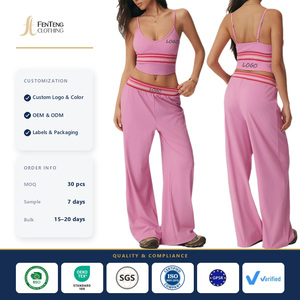
Precision Seamless Circular Knitting, Medical-Grade Graduated Compression, and High-Density Private-Label Activewear Engineered for Kansai’s Demanding Retail and Wellness Ecosystem.
Knitted with precision on Santoni circular knitting machinery to eliminate side-seam chafing and provide balanced compression curves for the Japanese market.
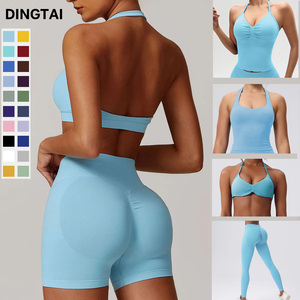
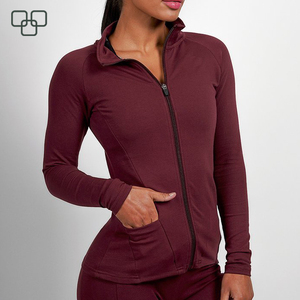
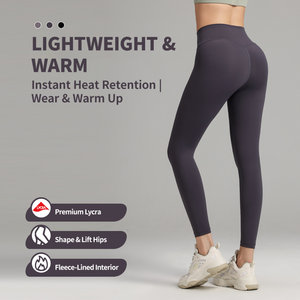
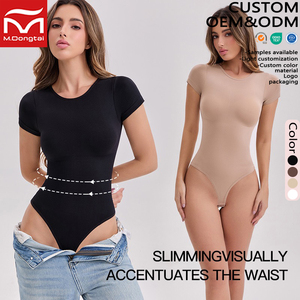
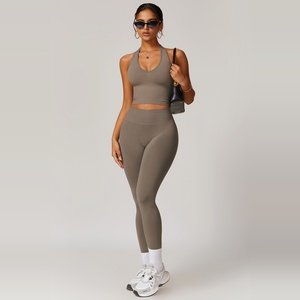
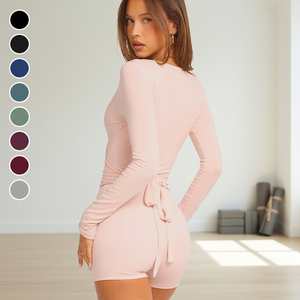
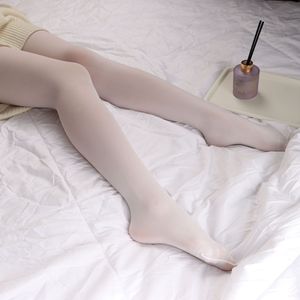
The commercial landscape of Osaka represents a unique confluence of cutting-edge retail sophistication and deeply pragmatic consumer expectations. From high-density commercial nodes like Umeda, Shinsaibashi, and Namba to the wellness, Pilates, and athletic clubs expanding across Chuo-ku and Kita-ku, the demand for compression wear has shifted dramatically beyond basic gym activewear. Today’s Kansai consumers demand dual-function garments: leggings that provide rigorous anatomical recovery during marathon preparation alongside subtle, minimalist silhouettes appropriate for long urban train commutes and active work environments.
For importers, wholesalers, and private labels distributing in Osaka, success depends on micron-level fit grading, high non-sheer opacity during deep flexion (Squat-Proof Rating), and thermoregulating yarns. Sizing charts built for North American or European demographics consistently suffer high return rates in the Japanese market due to excessive inseam lengths and inadequate ankle-to-calf taper ratios. As a specialized OEM/ODM manufacturer, we calibrate our tubular knitting cylinders specifically to Japanese anatomical sizing matrices (JIS specifications), ensuring an anatomical second-skin fit without lateral pooling or knee wrinkling.
Utilizing high-filament micro-polyamide and creora® high-recovery elastane, our Santoni circular knitting cylinders execute calibrated mmHg pressure drops from ankle (100%) to calf (70%) and thigh (40%), facilitating enhanced venous return during both urban walking and intense athletic recovery.
Japanese department stores and boutique studios reject sheen. Our double-knit 28-gauge fine interlock delivers a luxury chalk-matte finish, maintaining total visual opacity even under studio floodlighting, achieving complete Grade 4.5 opacity verification on standard stretch tests.
Osaka’s climate vacillates between humid, sweltering summers and damp coastal winters. We integrate hollow-core nylon filaments with hydrophilic chemical cross-finishes, creating a bi-component yarn structure that transfers skin moisture instantly to the garment exterior.
Operating in-house Santoni Top2V high-gauge circular knitting equipment alongside specialized 4-needle 6-thread flatlock assembly, our integrated production facility bridges the gap between massive wholesale volume and artisan-level Japanese quality control expectations. We control the complete manufacturing cycle: from initial yarn composition analysis and computerized jacquard programming down to OEKO-TEX Standard 100 Class I certified piece-dyeing and needle-detection inspection protocols.
Unlike trading brokers who farm out production across unmonitored subcontract workshops, our direct-to-factory model ensures absolute technical traceability. Our Osaka buyers receive comprehensive pre-shipment quality audit files, including JIS L 0844 wash-fastness certifications, seam tensile strength graphs, and calibrated dimensional stability logs post 50 commercial launderings.
Detailed answers addressing regulatory compliance, customs clearance at the Port of Osaka/Kobe, and private-label tech-pack translations.
Our baseline production MOQ is 1,000 pieces per style, which can be split flexibly across two sizes (e.g., Japanese S/M and M/L) and up to three custom pantone colors. For established Osaka retail chains with multi-SKU tech-packs, flexible stepped-tier MOQs are negotiated based on yarn yarn-dye batch minimums.
Yes. We ensure full compliance with Japanese textile import regulations. We can print or sew bilingual Japanese care labels containing mandatory fiber composition percentages, JIS L 0217 washing symbols, and registered importer identification marks before cargo dispatch.
Sample prototypes are completed and couriered via DHL/FedEx to Osaka in 5–7 business days. Bulk production takes 25–35 days post-sample sign-off. Ocean freight to Osaka Port or Kobe Port via direct Kansai express lines typically clears customs and delivers within 7 to 10 days of departure.
Japanese retail buyers have zero tolerance for loose metallic contaminants. Every piece of compression apparel passes through calibrated conveyor-type metal detectors (Hashima-grade high sensitivity) operating at a minimum 0.8mm ferrous test ball sensitivity before final polybag sealing.