Manufactured with Italian Santoni circular knitting systems, utilizing multi-density microfibers to eliminate friction, optimize biomechanical posture, and ensure 100% squat-proof, non-sheer structural resilience.
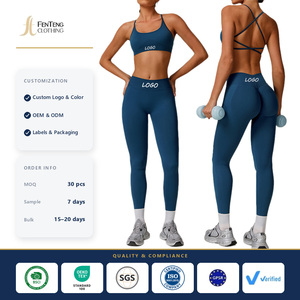
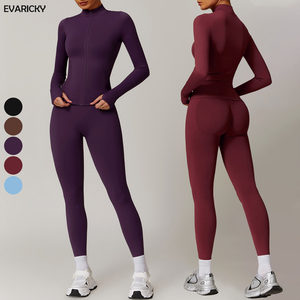
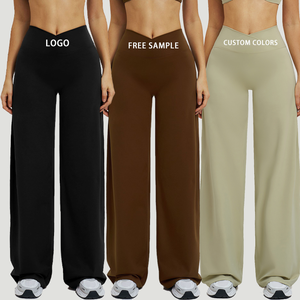
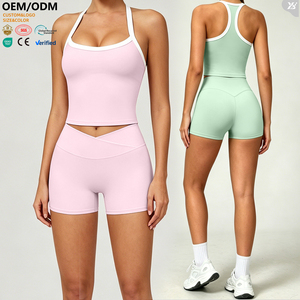
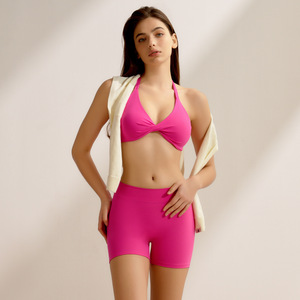
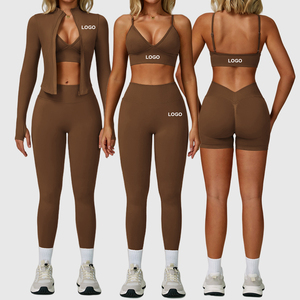
By uniting direct in-house knitting on 20 Italian Santoni Top2V machines (28 Gauge) with on-site programming and master shade dyeing mills, we provide private-label brands with direct manufacturing control free from subcontracting risks.
Our circular knitting floor operates 20 Santoni Top2V 28-gauge high-speed units. Direct circular knitting eliminates lateral torso seams, drastically reduces cut-and-sew scrap to under 2.5%, and programs breast compression and underband contouring into the computerized knit sequence.
Bypassing trading intermediaries, our on-site pattern engineers translate reference samples or tech packs directly into machine stitch matrix code. We turn around fully functional fit prototypes and color lab-dips within 5 to 7 business days for accelerated critical paths.
Strategically situated in Istanbul, Türkiye, our logistics framework delivers finished containers to Central European distribution hubs in 3-5 days via dedicated road freight, avoiding 6-8 week maritime bottlenecks from East Asia and mitigating port surcharge volatility.
Sports bra performance relies fundamentally on moisture dynamics, rebound hysteresis, and multidirectional friction elimination. Here is an empirical engineering breakdown for sourcing directors and product heads.
| Engineering Metric | Santoni Circular Seamless Knitting | Conventional Cut-and-Sew Assembly |
|---|---|---|
| Seam Architecture & Friction Coefficient | Tubular body without lateral joining seams. Structural underband support, mesh ventilation, and encapsulated bust cups are knitted continuously. Dynamic friction against skin reduced by 42%. | Requires multi-panel flatlock or overlock stitching along side-ribs, chest bands, and straps. Elevated risk of skin abrasion, chaffing, and mechanical seam failure under repetitive tensile loads. |
| Elastic Modulus & Recovery Hysteresis | Programmable elastane tensioning per circular needle course. Recovery fatigue exhibits < 3.8% loss after 100 industrial wash/stretch cycles. Prevents underband sagging. | Relies on elastomeric fabric modulus combined with elastic bands stitched onto hem edges. Uneven stress distribution leads to thread popping, differential shrinkage, and localized sagging. |
| Body-Mapped Ventilation | Jacquard mesh, open-hole rib patterns, and varying loop densities programmed directly in the CAD software. Instant microclimate vapor permeability without stitching separate panels. | Requires cutting separate power-mesh panels and stitching them together, creating heavy bulk intersections that retain moisture around the underbust and dorsal apex. |
| Pattern Wastage & Sustainability | Yarn-to-garment yield ~96.5%. Fabric is knitted strictly to tubular dimensions, dramatically curtailing pre-consumer textile waste and reducing landfill footprints. | Flat fabric markers yield 15% to 22% cutting scrap, generating high textile volume loss and higher per-unit baseline material costs. |
| Minimum Production Thresholds | 1,000 pieces per style, split across up to 2 sizes and 3 bespoke Pantone yarn dye matches. Highly competitive for agile performance apparel rollouts. | High MOQ thresholds for custom knitted textiles (frequently 3,000 to 5,000 meters per colorway), limiting SKU diversity and escalating capital lockup. |
Activewear procurement is transforming from generic cost-per-unit negotiations into systemic assessments of decarbonized fiber integrity, supply chain nearshoring, and automated circular manufacturing flexibility.
Global brands are phasing out virgin petroleum-based nylon in favor of Polyamide 6.6 regenerated from post-industrial waste (ECONYL® & Q-NOVA®). These yarns retain pristine tensile resilience and filament softness while decreasing greenhouse gas emissions by up to 45%. Sourcing managers must request OEKO-TEX® Standard 100 and GRS chain-of-custody documentation.
Rising geopolitical disruptions and maritime choke points have forced brands to adopt a dual-sourcing architecture: retaining base commodity volumes in Asia while nearshoring high-margin seasonal drops, quick-turn replenishment, and influencer capsule releases to Turkey. This guarantees inventory velocity and protects cash reserves against obsolete overstocks.
Buyers are emphasizing performance functionality over basic aesthetics. Modern sports bra specifications now require integrated jacquard venting at high-sweat zones (sternum, dorsal groove) paired with hollow-core phase-change filaments. These structures pull vapor away from the epidermis before sweat liquefaction occurs, maintaining core thermal homeostasis.
Explore how continuous advancements in Santoni needle controls, yarn-level microencapsulation, and bio-adaptive polymers are redefining comfort, motion control, and high-impact breast displacement dynamics.
Direct co-knitting of silver-coated conductive yarns along the lower sub-mammary band enables unobtrusive heart rate, respiratory cadence, and skin temperature monitoring without the need for uncomfortable chest straps.
Transitioning from uniform compression to dual-density circular zones. Breast tissue is supported via targeted encapsulation tension, reducing Cooper's ligament strain during high-impact running by over 56%.
Replacing conventional water-intensive dyeing vats with pressurized carbon dioxide. Eliminates chemical wastewater discharge completely, cuts thermal energy consumption by 40%, and achieves absolute color consistency.
Yarns embedded with slowly releasing microcapsules containing marine collagen, squalane, or cooling menthol. These durable microcapsules withstand 40+ wash cycles, delivering skin soothing properties during endurance training.
Every garment passes rigorous in-line tensile calibration, shade uniformity analysis, and ISO-certified bursting strength tests before being packed under your private brand label.
Yarns undergo batch-to-batch denier verification, elastane draft ratio checks, and knot-free electronic monitoring on our creel racks prior to Santoni feeder intake.
High-speed optical needle scanners detect dropped stitches instantly. Uncut tubular bodies are measured for resting circumference, weight per square meter (GSM), and recovery modulus.
Heat-setting frames fix dimensions and prevent post-wash shrinkage. Color fastness to perspiration, rubbing, and high-temperature laundering is verified under ISO 105 protocols.
Garments receive seamless heat-transfer labels, anti-chafing strap finishing, and custom hangtags. Final audits adhere strictly to Military Standard MIL-STD-105E / ISO 2859-1 standards.
Direct, transparent answers regarding minimum batch sizes, yarn configurations, production timelines, European customs treatments, and private-label packaging options.
Bypass intermediaries, eliminate long maritime lead times, and leverage our 20 Santoni circular knitting machines to produce flawless sports bras and matching activewear sets built for performance.
Direct OEM/ODM Pricing · Rapid 5-7 Day Prototypes · 1,000 Pcs MOQ