Private label sports bras give brands a way to shape fit, fabric, and design around a specific customer—not simply add another logo to a generic garment. The opportunity sits within a growing category. Grand View Research valued the global sports apparel market at USD 203.3 billion in 2023 and forecast 6.8% annual growth from 2024 to 2030. That figure covers sports apparel broadly, not sports bras alone, so it signals market context rather than guaranteed demand for any one product.
Product decisions matter. A racerback may feel secure during a studio class but restrictive on a long run. A wide, soft underband can reduce pressure, while poorly placed seams may rub after repeated washes. Professor Joanna Scurr, a breast-biomechanics researcher at the University of Portsmouth, has emphasized that breast movement varies with activity and requires suitable support. Her work offers a useful reminder: appearance alone cannot prove performance.
A private-label program can help a brand refine those details, test samples, and build a consistent fit across sizes. It can also create real trade-offs. More fabric options and fit revisions may improve the product, but they can raise costs and slow launch timelines. Not every brand needs a complex range. Start with a clear customer, a defined activity, and measurable fit checks. Then compare supplier claims with wear-test feedback and product specifications. The numbers are promising, but they do not replace careful testing.
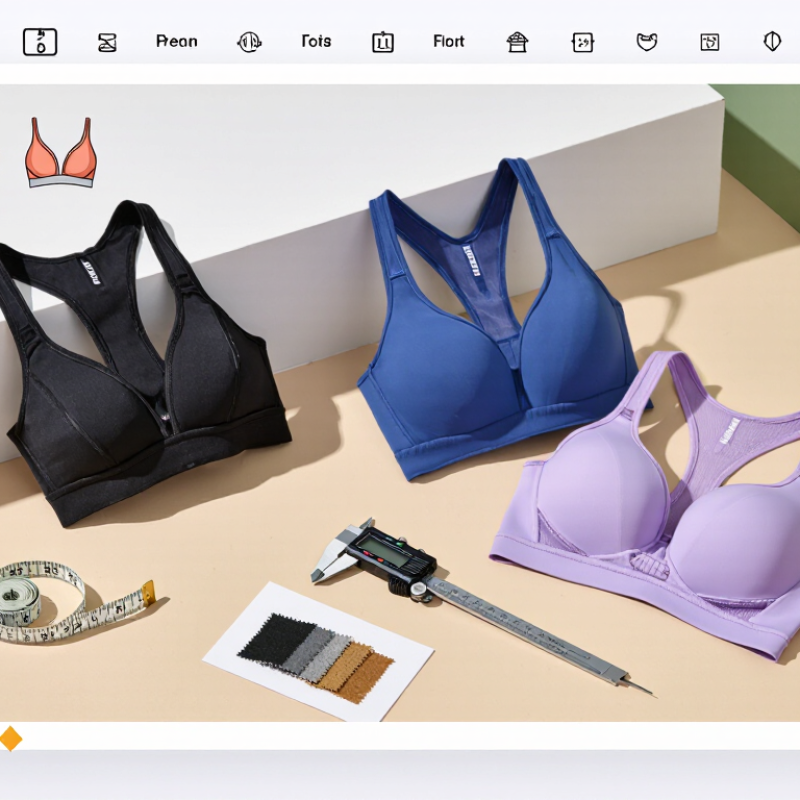
Private label sports bras are made by a manufacturer and sold under your brand’s name. You choose the product direction, while the manufacturer handles some or all of the development and production. The arrangement can begin with an existing bra pattern, or involve changes to fabric, colors, straps, cups, and labeling.
The process usually starts with a brief: target activity, intended fit, size range, and price point. A supplier may then share fabric options and a sample for review. Check details you can feel and measure, such as band tension, seam placement, cup coverage, and how quickly the fabric dries. Fit takes testing. One sample is not enough to assess every size or movement.
Once specifications are agreed, the manufacturer produces the order and applies your labels and packaging. Ask how samples, quality checks, minimum order quantities, and production timing are handled; these vary between suppliers. A polished sample can still change after repeated washing, so durability should be checked rather than assumed. Small fit issues matter. A strap that slips during a stretch can undermine an otherwise attractive design. Private labeling gives a brand control over presentation, but product decisions and clear communication still require careful attention.
Private labeling gives sportswear brands room to shape a bra around specific customer needs. Choices can include fabric weight, neckline, strap width, padding, and the feel of the underband. A runner may need secure support and flat seams, while someone doing yoga may prefer softer compression and wider straps. Small details matter. A strap that twists during movement can make a well-designed bra frustrating to wear.
Tips: Share a clear design brief with your manufacturer. Include measurements, fabric preferences, and intended activities. Request samples, then check fit during movement—not just in front of a mirror. Ask how construction choices may affect cost and production timing.
Keep feedback specific. Note where a band rolls, a seam rubs, or coverage changes during a stretch. Fit can vary across body shapes, so testing with a range of wearers gives more useful feedback than relying on one sample size. Some adjustments may also change the garment’s feel or appearance; that trade-off is worth discussing before approving a final sample. A polished sketch is only a starting point.
Private label sports bras give retailers more control over fit, fabric, color, and pricing than reselling generic products. Grand View Research estimated the global sports apparel market at USD 203.3 billion in 2023 and projected a 6.8% compound annual growth rate from 2024 to 2030. This points to expanding demand, but market growth alone does not guarantee sales. A distinctive bra needs reliable support, comfortable seams, and sizing that works across real bodies. Fit still matters.
A private label range can help a business build a recognizable product identity and test customer preferences directly. For example, a small run in two support levels can reveal whether shoppers prefer wide straps or removable cups. Product specifications also give buyers clearer control over fabric weight, stretch recovery, and packaging. These choices may support healthier margins, though sampling, minimum order quantities, and quality checks add costs. Underestimating those costs is an easy mistake.
Choosing a private-label sports bra gives a brand room to shape fit, support, and details around its customers. But the manufacturer matters as much as the design. Ask how patterns are graded across sizes, not just whether a sample looks good on one model. Request a size set and inspect strap stability, band pressure, seam placement, and stitching after movement. Small details show.
Before committing, clarify minimum order quantities, sample fees, production capacity, and realistic lead times. Ask what checks happen during cutting, sewing, and final inspection, and how defects are documented. Clear answers help; vague promises do not. Review material specifications and available test reports rather than relying on labels such as “high performance.” Fabric should recover after stretching, feel comfortable against skin, and remain opaque during deep bends. Polyester or nylon blends with elastane are common, but fiber content alone cannot predict comfort.
Compare swatches in the intended weight and test them after repeated washing. Check drying time, pilling, color change, and whether the lining shifts. Recycled-content claims should have supporting supplier documentation. Also discuss dye-lot consistency and whether replacement fabric can be sourced later. I would not choose solely by the lowest quote; still, a premium sample can disappoint in bulk. That risk deserves a small pilot order and written approval standards.
When selecting a manufacturer and materials, compare performance requirements alongside your product and production goals.
Typical fiber moisture regain: Cotton 8.5%, nylon 4.5%, and polyester 0.4% under standard reference conditions (about 21°C and 65% relative humidity). These are general fiber values, not a measure of garment wicking performance; blends, fabric construction, and finishes also matter. Ask manufacturers for samples and test stretch recovery, support, opacity, and colorfastness.
Developing a private label sports bra line starts with a clear use case. Decide whether the design is for low-impact studio sessions, running, or everyday support. These needs affect compression, coverage, straps, and fabric. A soft hand feel matters, but recovery matters too. Fabric that stretches out after washing can undermine an otherwise polished sample.
Build a product brief with target users, size range, support level, and construction details. Ask the manufacturer for fabric composition, care guidance, and sample timelines. Then test samples on people across the intended size range. Have them move, breathe deeply, and wear each bra for a full workout. Check for shifting straps, chafing at the underarm, rolling bands, and visible seam pressure. Small details count. Record feedback in a consistent form, and revise the pattern before approving bulk production. One limitation: a small wear test cannot represent every body or activity.
Before launch, confirm that labels, measurements, and product descriptions match the finished garment. Avoid making performance claims that testing does not support. Photograph the bra on different body types, and explain fit, support, and care clearly. Start with a manageable range, monitor returns and customer comments, then use those signals to adjust sizing or construction. The first version may not be perfect; a twisting strap or confusing size chart is useful evidence, not something to ignore.
A practical development and launch framework for building a private label sports bra collection. Timing and performance targets below are planning guidelines; confirm specifications with your manufacturer and testing provider.
| Stage | Key decisions and actions | Useful product data | Suggested validation target | Typical planning window | Ready-to-advance checkpoint |
|---|---|---|---|---|---|
| 1. Define the opportunity | Choose the intended activity, customer, support level, coverage, and price position. Compare existing products by construction and use case rather than copying a competitor’s design. | Target activity; support level; coverage preference; planned size range; target retail price; forecast units. | Write a product brief with one primary use case and a clear list of must-have features. | 1–2 weeks | The brief identifies the intended wearer, activity, fit priorities, and commercial constraints. |
| 2. Select materials | Review fabric and lining options for stretch, recovery, opacity, hand feel, moisture management, and compatibility with the intended construction. | Fiber content; fabric weight in g/m²; stretch and recovery; color options; care instructions; available test reports. | Evaluate swatches for stretch in both directions, recovery after repeated extension, opacity under stretch, and comfort against skin. | 1–3 weeks | Approved fabric and trim choices meet the design brief and can be sourced at the planned order quantity. |
| 3. Build the product specification | Create a technical pack covering garment construction, measurements, stitching, elastic placement, labels, packaging, and approved materials. | Measurement chart; grade rules; seam and stitch details; elastic width; color references; bill of materials; label placement. | Review the specification for measurable instructions and confirm that sample and bulk production will use the same approved materials. | 1–2 weeks | The manufacturer has acknowledged the specification and identified any open questions before sampling. |
| 4. Fit and refine samples | Assess fit on the intended size range. Review band stability, cup coverage, strap comfort, neckline, armhole, seam placement, and ease of movement. | Sample size; wearer measurements; garment measurements; fit comments; revision number; photos or annotated sketches. | Record fit feedback by size and test movement such as reaching, bending, and jumping. Agree on measurement tolerances with the manufacturer. | 2–5 weeks, depending on sample rounds | A fit-approved sample and finalized measurement chart are signed off before bulk production. |
| 5. Test performance and care | Check the finished garment under realistic use and care conditions. Use a qualified laboratory when formal test results or market-specific compliance checks are needed. | Wash-cycle results; dimensional change; color change; seam condition; elastic recovery; opacity; wearer comfort feedback. | Set pass/fail criteria before testing. Inspect after repeated care cycles and confirm that the bra retains acceptable fit, appearance, and function. | 1–3 weeks | Test results meet the written criteria, and any required labeling or market compliance review is complete. |
| 6. Confirm production readiness | Approve the pre-production sample, size set, color standards, packaging, production quantity, inspection plan, and delivery schedule. | Purchase order; approved sample; size and color breakdown; inspection criteria; carton details; lead-time milestones. | Agree on a documented inspection and defect-classification process before production begins. | 1–2 weeks before production | All approvals are documented, and materials, quantities, specifications, and delivery dates are aligned. |
| 7. Produce and inspect | Monitor production against the approved sample and specification. Check measurements, construction, labeling, shade consistency, and packing. | Production status; inspected quantity; defect records; measurement results; packing list; shipment documents. | Use the agreed sampling plan and acceptance criteria. Resolve critical issues before goods are released for shipment. | Supplier-dependent; confirm before order placement | Inspection is accepted, discrepancies are resolved, and shipment documents match the order. |
| 8. Launch and learn | Prepare product photography, accurate fit and care information, size guidance, inventory allocation, and customer support responses. | Sell-through; return rate; size-related return reasons; customer reviews; stock availability; reorder lead time. | Review feedback by size, color, and product feature after launch. Use recurring fit or quality issues to guide the next production run. | Begin 2–4 weeks before launch; review performance continuously | Product pages and inventory are ready, and a process is in place to capture customer feedback and post-launch issues. |
Planning note: Sampling schedules, minimum order quantities, laboratory methods, and acceptable performance thresholds vary by supplier, fabric, construction, and destination market. Agree on requirements in writing before committing to bulk production.
You can shape the fit, fabric, colors, and pricing around your customers. A distinct range may also help build product identity. More control does not guarantee more sales.
Test a small run with two support levels or strap styles. Ask shoppers about fit, coverage, and removable cups. Keep the questions simple.
Ask how patterns are graded across sizes, and request a full size set. Check straps, band pressure, seams, and stitching during movement. A sample on one model is not enough.
Check fabric weight, stretch recovery, comfort, and opacity during deep bends. Polyester or nylon blends with elastane are common, but fiber content alone tells little. Test swatches after washing.
Have people across the intended size range move, breathe deeply, and wear each sample through a full workout. Look for chafing, shifting straps, rolling bands, and seam pressure. Record feedback by size and activity.
Confirm minimum order quantities, sample fees, lead times, and inspection steps. Sampling and quality checks add costs. A low quote can still lead to a disappointing bulk order.
Compare bulk samples with approved samples, and set written standards for measurements and defects. Check dye-lot consistency and future fabric availability. I would still start with a small pilot order.
Start with a manageable range and explain fit, support, and care clearly. Use claims supported by testing. Monitor returns and customer comments; the first version may need changes.
Private label sports bras allow a business to offer workout apparel made by a manufacturing partner and sold under its own brand identity. This approach gives teams greater control over design choices, including fit, support, fabric, colors, and finishing details, so products can better reflect their customers’ needs and the brand’s positioning. It can also help create a distinctive product range, build customer loyalty, and provide more flexibility in pricing and product planning.
Choosing a manufacturer involves assessing production capabilities, communication, quality standards, and experience with performance materials. Consider fabric comfort, stretch, breathability, durability, and suitability for different activities. Before launch, develop samples, check fit and construction, gather wearer feedback, and refine the design. Careful testing and planning can help ensure the finished private label sports bras meet quality expectations and are ready for a confident market introduction.