Choosing a seamless activewear wholesale supplier is not just about comparing prices. The right partner must deliver consistent fit, reliable production, clear communication, and materials that perform after repeated wear. A sample may feel smooth in the hand, yet still reveal weak recovery, visible seams, or uneven dye after washing. Details matter.
For this guide, apparel-sourcing specialist Maya Chen offers a practical rule of thumb: “A strong supplier proves consistency across sizes, colors, and repeat orders—not just in one perfect sample.” Treat that as a buying principle, not a substitute for your own checks. Ask for size-run samples, fabric composition, minimum order quantities, lead times, and quality-control steps. If answers stay vague, pause. Small gaps in communication can become costly delays.
The suppliers featured in this Top 10 list serve different needs, from emerging labels testing a compact collection to established brands planning larger runs. Compare their production capabilities, customization options, sample process, and responsiveness before requesting a quote. Look closely at stitching around the gusset and waistband, and test stretch recovery after washing. These checks take time. They can also expose an awkward truth: the lowest unit price may not be the best value. Use the list as a starting point, verify current terms directly, and choose a seamless activewear wholesale supplier whose strengths match your product and order plan.
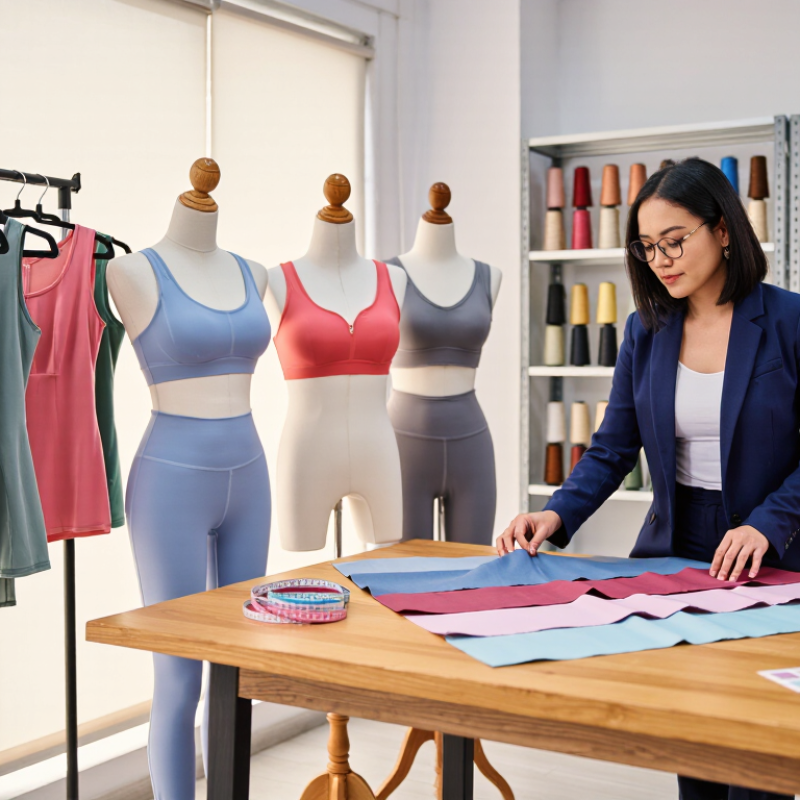
Seamless activewear is made on circular knitting machines, reducing the need for side seams and separate fabric panels. The result can feel smooth against the skin, but fit still depends on knit structure, yarn, and garment pattern. Textile Exchange’s Materials Market Report 2024 estimates that global fiber production reached 124 million tonnes in 2023, with polyester representing about 57%. This broad market figure is not specific to seamless garments, but it shows why fiber composition deserves close attention during wholesale sourcing.
Ask suppliers for fiber-content details, size specifications, and samples from the intended production process. Check stretch recovery after repeated wear, opacity under movement, and seam-free areas for pressure or irritation. A sample may fit well on a mannequin yet feel restrictive during a squat. That matters. Confirm minimum order quantities, color options, lead times, and how defects are handled before approving bulk production. Low sample costs can still mislead; production consistency is the harder test.
Tips: Wash and stretch samples several times, then compare measurements. Request written specifications, and keep one approved sample as a reference. It is easy to overlook small fit changes.
The options below describe supplier types, not named companies or verified rankings. Capabilities, minimum order quantities, prices, and lead times vary by supplier and should be confirmed in writing.
| # | Supplier type | Typical seamless capability | Potential advantage | Best suited to | What to verify |
|---|---|---|---|---|---|
| 1 | Integrated seamless knitting factory | Knits garment components on circular seamless machines; may handle finishing and assembly in-house. | Direct access to knitting development and production processes. | Brands developing engineered zones, textures, or compression features. | Machine and gauge availability, sample-to-bulk consistency, and which operations are subcontracted. |
| 2 | OEM activewear manufacturer | Produces garments to a buyer’s design, specifications, and approved materials; seamless capability depends on its equipment or partners. | Can follow buyer-provided patterns, tech packs, and quality requirements. | Buyers with a defined product design and technical specifications. | Relevant seamless samples, pattern ownership terms, material sourcing, and production oversight. |
| 3 | ODM activewear manufacturer | Offers existing product designs that can usually be adapted with agreed colors, trims, or branding. | Existing styles may reduce the amount of original product development required. | New businesses testing a focused range without developing every style from scratch. | Design exclusivity, available customization, size grading, and whether the sample matches bulk production. |
| 4 | Private-label activewear supplier | Supplies ready-made or lightly customizable garments that can be sold under the buyer’s label. | May provide a simpler route to branded products than full custom development. | Retailers seeking private-label basics or a quick initial assortment. | Label options, stock availability, replenishment terms, and permission to use product images. |
| 5 | Wholesale distributor | Resells finished goods from manufacturers; generally does not develop or knit custom seamless garments. | May offer ready-to-ship stock and mixed styles or sizes, subject to inventory. | Buyers prioritizing quick access to existing products over custom construction. | Stock status, product origin, resale authorization, return terms, and consistency of future supply. |
| 6 | Sourcing agent or trading company | Coordinates sourcing and communication; manufacturing is carried out by one or more factories. | Can help buyers navigate supplier communication, sampling, and production follow-up. | Teams that need sourcing support or have limited local manufacturing experience. | Factory identity, agent fees, quality-control responsibility, and who holds contracts and payments. |
| 7 | Fabric mill paired with a cut-and-sew factory | A mill supplies fabric and a separate contractor cuts and assembles garments; this route is not the same as knitting a garment seamlessly in one piece. | Can suit styles that use stretch fabrics and conventional cut-and-sew construction. | Buyers open to bonded, flatlock, or other sewn activewear rather than true seamless construction. | Fabric test reports, fabric-to-garment traceability, seam construction, and responsibility for defects. |
| 8 | Domestic contract manufacturer | Manufactures within the buyer’s domestic market; seamless production depends on local equipment and specialization. | Local communication and shorter transport routes may simplify coordination. | Buyers who value local production, closer factory visits, or regional supply chains. | Actual seamless equipment, capacity, labor and material costs, and delivery commitments. |
| 9 | Overseas export manufacturer | Makes goods for export; production method and seamless expertise vary by factory rather than being guaranteed by location. | May provide access to established export processes and a broader manufacturing base. | Buyers able to manage international sampling, shipping, and import requirements. | Incoterms, import duties, compliance documents, shipping schedule, and independent inspection options. |
| 10 | Development-led small-batch manufacturer | Focuses on prototyping and smaller production runs; it may use in-house equipment or specialist production partners. | More development attention may be available before a larger production commitment. | Startups and established brands validating fit, fabric, or a new seamless concept. | Minimum order by style and color, sample fees, scale-up capacity, and repeat-order consistency. |
Seamless activewear is typically made using specialized knitting processes that form garment sections with fewer or no conventional side seams. Ask suppliers to identify the production method, provide a relevant physical sample, and document material composition, testing, sizing, quality standards, and commercial terms before placing an order.
It is knitted on circular machines, often reducing side seams and separate panels. Fit still depends on yarn, knit structure, and garment pattern.
Wash and stretch it several times. Check recovery, opacity during squats, and pressure around seam-free areas. A mannequin cannot tell you everything.
Compare garment, sample, setup, label, packaging, and freight costs. Ask for a written breakdown. Cheap unit prices can hide costly minimums.
Ask about machine capacity, stitch density, size grading, defect tolerances, and reorder times. Get the details in writing. Small differences matter.
Confirm whether minimums apply by style, color, or size mix. Smaller orders limit stock risk; larger orders may lower unit costs but tie up cash.
Compare a production sample with your approved reference. Measure key points before and after washing. Keep one approved garment. It helps.
Request material composition records and supporting transaction documents. Check that they cover the actual facility and product. Documents do not prove fit.
No. Request a small trial order in your intended fabric weight. I may still miss a fit change, so review each batch carefully.
This article explores how to source seamless activewear for wholesale, from understanding how seamless construction affects comfort, fit, and production to identifying what makes a supplier a suitable partner. It outlines practical evaluation criteria, including product quality, material options, customization capabilities, communication, production capacity, and consistency. The profiles of ten supplier types offer a framework for comparing different approaches without assuming that one option fits every business.
A side-by-side assessment of capabilities, costs, and minimum order quantities can help buyers match supplier terms to their budgets and sales plans. Before choosing a seamless activewear wholesale supplier, consider sampling, sizing requirements, lead times, quality checks, and the clarity of order terms. Careful comparison can reduce sourcing uncertainty and support a more reliable wholesale relationship.