Global sourcing has moved beyond comparing prices on a supplier spreadsheet. A reliable seamless activewear manufacturer must control knitting precision, yarn quality, fit testing, and production consistency. Small details matter: a waistband should recover after repeated stretching, while body panels must remain smooth under movement. Fabric weight, colorfastness, moisture management, and seam-free comfort also deserve close inspection.
Textile machinery specialist Alberto De Conti offers a useful reminder: “Seamless performance depends on the harmony between yarn, machine settings, and human judgment.” That principle shapes this guide to the Top 10 Seamless Activewear Manufacturers for Global Sourcing. The selected companies are considered through practical sourcing factors, including technical capability, sample development, quality systems, customization, production capacity, and communication reliability. A polished catalog is not enough. Ask for test reports. Inspect a physical sample. Review the factory’s response when a specification changes.
No factory is perfect. Even experienced suppliers may miss a shade, delay a sample, or underestimate compression needs. That is where honest communication becomes valuable. Buyers should examine minimum order quantities, lead times, packaging details, ethical production practices, and after-sales support before committing. This ranking is not a final verdict. It is a working reference for brands seeking dependable partners, clearer decisions, and activewear that performs beyond the product photograph.
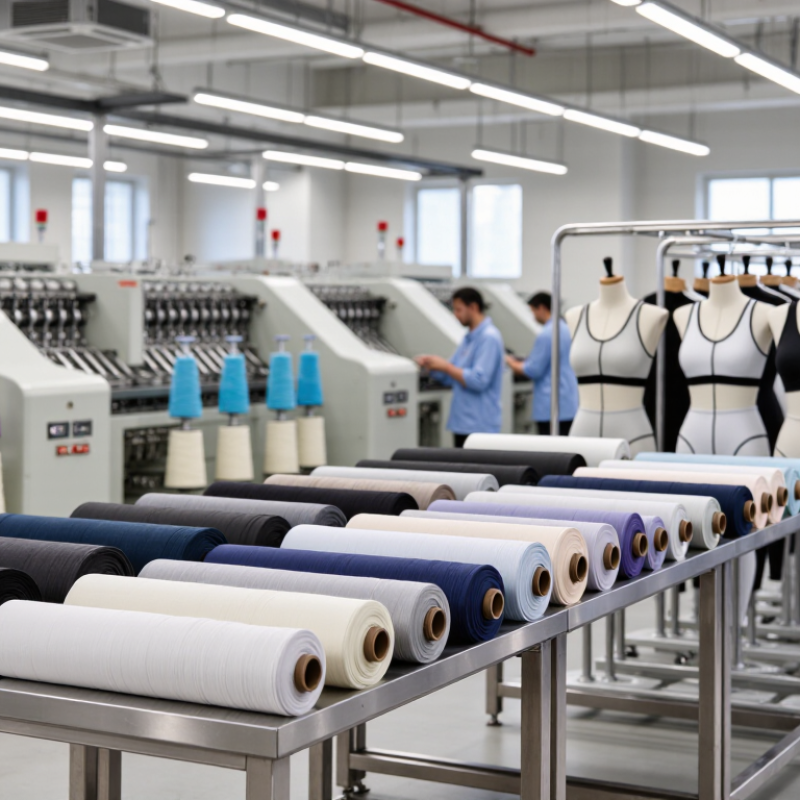
A seamless activewear manufacturer is more than a factory with circular knitting machines.
It should understand yarn behavior, body mapping, compression zones, and garment recovery. A technical team must adjust stitch density around the waist, bust, and shoulders. Small details matter. Poor recovery can create bagging after repeated wear.
Textile Exchange’s Materials Market Report 2024 estimated global fiber production reached 124 million tonnes in 2023. Polyester represented about 57% of total output.
This makes fiber traceability and recycled-content verification important sourcing checks. Reliable manufacturers should provide yarn certificates, batch records, color standards, and laboratory test results. They should also test pilling, colorfastness, stretch recovery, dimensional stability, and seam strength. A report without batch information is weak evidence.
Manufacturing depth also defines reliability.
Buyers should inspect knitting capacity, linking equipment, inspection procedures, and production records. The OEKO-TEX Standard 100 framework shows why chemical safety testing must match the finished product and its components. Yet certifications do not replace factory judgment. A certified facility can still miss defects during packing.
Sampling should include measurements before washing, after washing, and after repeated stretching. This takes time. It prevents expensive surprises.
A capable partner communicates limits clearly.
It explains minimum order quantities, development fees, lead times, and material risks before production. No manufacturer performs perfectly. Even an experienced team may underestimate shade variation between yarn lots. That weakness should be visible, documented, and corrected through a controlled approval process.
Look for circular knitting, bonding, compression control, and strong fabric recovery. Ask for recent samples. Check seams, gussets, waistbands, and logo placement after washing. Product photos are not enough.
Request inspection reports, fabric test results, defect rates, and corrective-action logs. Useful tests include GSM, elongation, colorfastness, and pilling performance. These records reveal production habits. They do not guarantee perfection.
Wash and stretch samples repeatedly. Check opacity, waistband pressure, stitch density, and movement comfort. Inspect size consistency afterward. One sample can mislead.
Ask where fibers are spun, dyed, and finished. Request fiber certificates and material verification documents. Confirm all subcontractors in writing. Traceability can become unclear quickly.
Confirm minimum order quantities, sample timing, and peak-season capacity. Ask what happens when fabric arrives late. A quoted lead time may change. That risk needs discussion.
Compare quality, minimum quantities, lead time, compliance, communication, and landed cost. Include sample results and corrective-action performance. Do not focus only on unit price. Cheap can become expensive.
Send a detailed technical pack and observe the response. A capable team should ask about measurements, tolerances, colors, and packaging. Silence may signal future delays. Fast replies are not enough.
Arrange a video walkthrough or independent assessment when practical. Compare the production floor with submitted documents. Observe machine capability, operator training, and inspection methods. Documents can look better than reality.
Even experienced teams may miss packaging waste, late materials, or revision errors. No factory is perfect. Choose a partner that admits problems and records fixes. I would allow one revision cycle. Perfect specifications rarely appear immediately.
Choosing the right seamless activewear manufacturer is essential for building a reliable, competitive, and scalable apparel supply chain. A qualified partner should demonstrate strong expertise in seamless knitting, fabric development, garment construction, sizing consistency, and performance testing. When evaluating global manufacturing partners, buyers should consider product quality, production technology, communication, minimum order quantities, lead times, customization capabilities, and responsiveness. The best manufacturers may specialize in different strengths, such as advanced seamless construction, sustainable material options, high-volume production, flexible sampling, or specialized sportswear design.
Global sourcing also requires careful attention to compliance, ethical production, factory capacity, quality control systems, pricing transparency, and shipping coordination. Cost should be assessed alongside durability, service, and long-term value rather than used as the only selection factor. To build a successful partnership, brands should provide clear technical specifications, approve samples systematically, establish inspection standards, and maintain regular communication. A well-matched manufacturer can support innovation, reduce production risks, and help deliver consistent activewear collections to international markets.