Finding a dependable seamless crop tops wholesale supplier takes more than comparing prices. A smooth sample can look convincing under bright showroom lights, yet lose its shape after washing or feel restrictive during movement. Request samples in several sizes and colors. Check stretch, recovery, stitching, fabric weight, and shade consistency. Ask how production lots are inspected and what happens when a batch differs from the approved sample. Small details matter.
Sourcing specialist Maya Chen puts the core test this way: “A good sample starts the conversation; consistent production earns the reorder.” Treat that as a practical guide, not a guarantee. Ask suppliers for clear specifications, realistic lead times, minimum order quantities, and recent references you can verify. Notice how promptly they answer specific questions. Vague replies are worth examining. So are unusually low prices. A supplier may offer flexibility, but claims should match sample quality and documented capacity.
This guide will cover supplier research, sample evaluation, communication, and order planning for seamless crop tops wholesale. It will also look at warning signs, such as changing fabric details or unclear quality checks. One limitation deserves attention: a single sample cannot prove long-term consistency. Compare later production against the approved piece, and keep written records. That takes time. Still, careful checks can help buyers make more informed decisions and build steadier supplier relationships.
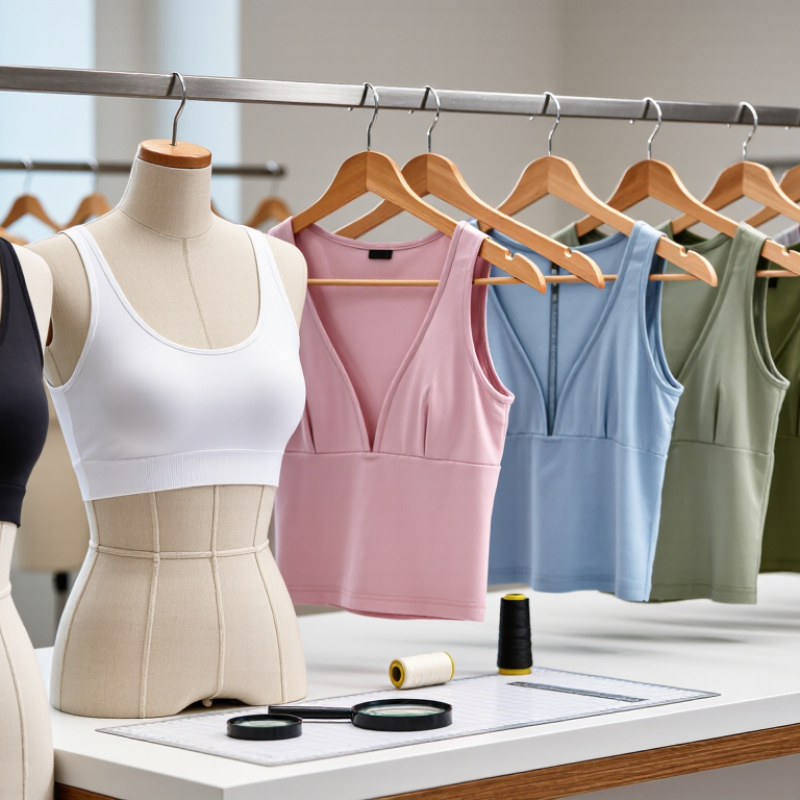
Before contacting seamless crop tops wholesale suppliers, write down exactly what you need. Specify the intended wearer, activity, fit, and price range. A low-impact studio top may need different support and compression from an everyday layering piece. Details matter.
Set measurable product requirements. List your size range, target chest and hem measurements, fabric composition, preferred weight, colors, and packaging needs. For seamless styles, ask about knit construction, stretch recovery, and how the garment feels after repeated washing. Request a sample in more than one size if grading consistency matters. Check opacity under bright light and during movement, not only on a hanger. A neat sample can still fit poorly.
Define your wholesale limits before comparing suppliers. Record your opening order quantity, acceptable reorder quantity, delivery window, and budget per unit. Ask whether minimums apply by style, color, or size, and request a written quote that separates product, packaging, and shipping costs. Leave room for sample revisions; timelines can shift when yarn or colors change. It is tempting to choose the lowest price, but unclear specifications make quotes hard to compare. I would revisit the requirements after testing a sample, because real fit feedback often exposes assumptions that looked fine on paper.
Identify Potential Seamless Crop Top Suppliers
Start with factories that can show real seamless production, not only finished-garment photos. Ask which knitting machines they use, what yarn blends they handle, and whether they can make your required size range. Request a sample in the intended fabric, then check stretch recovery, seam-free construction, opacity, and wash performance. A smooth sample matters. So does a clear production record. Textile Exchange’s 2024 Materials Market Report estimates global fiber production reached 124 million tonnes in 2023, with polyester representing 57%. This broad market data is not proof of any supplier’s quality; it does underline why fiber composition and sourcing claims deserve careful verification.
Compare several candidates using the same questions. Ask for material specifications, sample lead time, minimum order quantity, production capacity, and a recent quality-control checklist. Confirm whether the quoted price includes labels, packaging, and inspection. Video calls can help you see machinery and fabric storage, but they cannot replace independent checks. A polished presentation may still leave gaps. I would not treat a quick reply as evidence of a dependable factory.
Tips: Send a simple tech pack with measurements, fabric weight, and target compression. Keep notes on response times and sample changes. Ask suppliers to explain any test results in plain terms, and verify certificates with the issuing organization when relevant. A small trial order can reveal issues that a sample cannot.
Use these supplier categories and screening benchmarks to build a shortlist. MOQ, lead time, and certifications vary by factory and order; confirm all details directly before placing an order.
| Potential Supplier Type | Where to Search | Relevant Capabilities to Check | Indicative MOQ to Ask About | Typical Lead-Time Questions | Evidence to Request |
|---|---|---|---|---|---|
| Seamless knitting factory | Apparel trade directories, sourcing fairs, and textile manufacturing clusters | Circular knitting, garment shaping, elastic support zones, and repeatable sizing | Request separate minimums for stock designs and custom designs; compare by style and color | Ask for sample, bulk-production, and repeat-order timelines | Factory address, machine and process details, recent production samples, and inspection procedure |
| Activewear OEM/ODM manufacturer | B2B sourcing platforms and apparel industry exhibitions | Pattern development, fabric sourcing, private-label finishing, and packaging options | Confirm whether MOQ applies per style, color, or total order | Ask how sample approval and material availability affect the production schedule | Tech-pack review, pre-production sample, fabric composition, and written order specifications |
| Wholesale distributor with ready stock | Wholesale marketplaces and regional apparel distributors | Available sizes and colors, replenishment reliability, and clear stock records | Check carton minimums and whether mixed-size or mixed-color packs are permitted | Verify dispatch time, stock reservation period, and restock frequency | Current inventory list, dated product photos, sample order, and returns policy |
| Knitted garment specialist | Knitting-industry directories and referrals from fabric or trim suppliers | Yarn selection, knit structure development, stretch recovery, and finishing consistency | Ask whether yarn-dyeing or custom yarn requirements change the minimum | Request timing estimates for yarn sourcing, lab dips, sampling, and bulk production | Fiber-content documentation, wash-test results, color approval process, and sample swatches |
| Regional cut-and-sew or finishing partner | Local garment manufacturing networks and sourcing-agent referrals | Seam finishing, removable or sewn-in cups, labels, and final quality control | Confirm minimums for finishing services and any customer-supplied materials | Clarify production capacity, handoff schedules, and responsibility for delays | Process samples, quality checklist, subcontracting disclosure, and inspection records |
Shortlist rule: Contact several candidates, compare like-for-like samples and written quotations, verify business and production details independently, and begin with a sample or small trial order before committing to larger quantities.
A supplier’s years in business can be reassuring, but they do not prove consistent quality. Ask how long the team has produced seamless crop tops, and request examples of similar orders. Look for practical details: machine types, monthly output, fabric blends, and how sizing is graded. Vague answers deserve follow-up.
Ask for evidence. A capable supplier should explain how it controls stretch, recovery, and seam-free construction across sizes. Request a sample, then compare it with the production specification. Check the underband after repeated stretching, inspect the knit around armholes, and note whether the fabric turns sheer under tension. Small details matter. One sample alone, however, cannot guarantee every bulk unit will match.
Discuss production controls before placing an order. Ask how operators check machine settings, yarn lots, color consistency, and finished measurements. A clear inspection record is more useful than a broad promise of “high quality.” Confirm the supplier’s realistic capacity and lead time, including time for sampling and corrections. It is easy to focus on speed; I would still leave room for delays, because even experienced teams can face material or scheduling changes.
Evaluate Supplier Experience and Production Capabilities
Suggested evaluation weights for comparing suppliers—not industry survey results. Verify each area using factory records, product samples, quality documentation, and written production terms.
Before placing a bulk order, request a current sample in the exact fabric and construction you plan to sell. Check seam strength by gently stretching the side seams, then wash the top and inspect its shape, color, and opacity. A sample can look excellent under showroom lights. Test it in daylight, too. Compare measurements across several sizes, since one well-made sample does not prove consistent production.
Ask suppliers for relevant quality certificates and verify the issuing body, validity dates, and product scope. A certificate may cover a fabric mill rather than the finished crop top, so read the details carefully. Request test reports for colorfastness, fabric composition, and stretch recovery when available. Keep in mind that paperwork alone cannot confirm how every production batch will perform. It is easy to overlook that.
Check the supplier’s business registration, factory or office address, and experience with similar apparel orders. Ask for recent production references and a written quality-control process, including how defects are recorded and handled. Confirm that the invoice, payment details, and company name match. A video call can help, but it is not a substitute for independent checks. Record what you verify, and clarify any gaps before paying a deposit.
Compare the full landed cost, not just the unit price. Ask each seamless crop top wholesaler for written prices at different order volumes, minimum order quantities, payment schedules, shipping terms, and quote-validity dates. Confirm whether the quoted price includes labels, packaging, and any sample fees. The WTO reported that global merchandise trade volume grew by 0.8% in 2023. That uneven trade environment makes clear lead times and price-change terms worth checking before placing an order.
Supplier reliability takes more than a polished catalog. Request a production sample in your intended fabric and size range, then check stretch recovery, seam comfort, opacity, and wash performance. Ask for recent buyer references and details about the factory producing your order. Verify any audit or quality documents directly with the issuing organization. A good sample is not proof of consistent bulk quality; that distinction is easy to overlook. Put acceptable defect levels, inspection timing, and remedies for late or off-spec goods in writing.
Tips: Start with a small trial order. Record the promised ship date, actual delivery date, and inspection results. Compare those notes against the supplier’s written terms before committing to a larger run. Be cautious if answers about capacity or production location keep changing.
Write down the intended wearer, activity, fit, and target price. A studio top may need more support than a light layering piece. Details matter.
Specify the size range, chest and hem measurements, fabric composition, weight, colors, and packaging. Ask about knit construction and stretch recovery. Feel the fabric after washing, too.
Request samples in more than one size if grading consistency matters. Check opacity in bright daylight and while moving. A hanger tells you little.
Ask about opening and reorder quantities, delivery windows, and minimums by style, color, or size. Request a written quote separating product, packaging, and shipping costs. Leave room for revisions.
Gently stretch the side seams, then wash the top. Check its shape, color, and opacity afterward. Compare measurements across several sizes. One sample is not proof of every batch.
Verify the issuing body, validity dates, and product scope. A certificate may cover fabric, not the finished garment. Read the details carefully.
Check its registration, factory or office address, and experience with similar orders. Ask for recent references and a written quality-control process. Keep a record of what you verify.
Make sure the invoice, payment details, and company name match. Clarify any gaps first. A video call helps, but it is not an independent check. I would revisit the sample feedback, too; assumptions can linger.
Finding reliable seamless crop tops wholesale suppliers starts with defining your product requirements, including fabric, fit, sizing, colors, expected order quantities, and target price range. With these details in place, you can search for potential suppliers through trade directories, industry events, and direct inquiries, then narrow your options based on their relevant experience and ability to handle your production needs.
Before placing an order, assess product samples for comfort, construction, consistency, and durability. Ask about quality-control processes, applicable certifications, and business credentials, and clarify pricing, minimum order quantities, lead times, payment terms, and shipping arrangements. Compare suppliers using the same criteria, request clear written answers, and consider a small trial order to evaluate communication and delivery performance. A careful review of both product quality and wholesale terms can help you choose a dependable supplier for a lasting business relationship.