Finding a reliable seamless yoga pants manufacturer takes more than comparing prices. The right partner must turn a design brief into consistent fit, dependable fabric, and repeatable production. Small details matter. Check how the factory handles waistband recovery, seam placement, opacity, and size grading. Request samples in several sizes, then inspect them after washing and movement tests. A smooth sample is encouraging, but it is not proof of stable bulk quality.
For a practical lens, this introduction uses Daniel Wu as an illustrative textile-sourcing specialist, not a verified interviewee. His editorial rule of thumb is: “Trust the sample, then verify the process that made it.” That distinction matters. Ask how the manufacturer controls yarn lots, knitting tension, dye consistency, and inspection records. Request clear answers about minimum order quantities, lead times, sample revisions, and defect handling. Look for evidence, not polished promises.
A strong seamless yoga pants manufacturer should welcome specific questions and explain limits plainly. Review production samples, technical specifications, and communication habits before committing to a large order. A factory may produce excellent leggings yet struggle with your fabric weight or fit requirements. That is easy to miss. This guide outlines practical checks for assessing capability, quality, communication, and long-term fit. It also recognizes an imperfect truth: no checklist removes every risk. Careful verification simply makes surprises less likely.
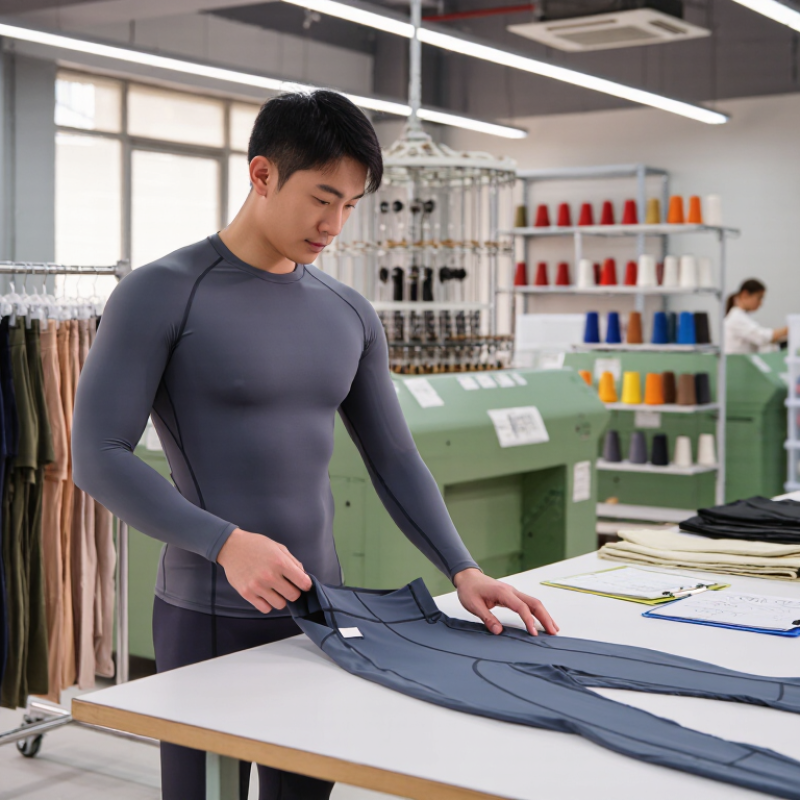
Before contacting a seamless yoga pants manufacturer, define the garment you actually need. Specify fabric composition, target weight, stretch and recovery, compression level, waistband height, and inseam length. A pair for gentle studio sessions may need different support from leggings designed for frequent, high-intensity training. Describe intended sizes and colors, too. Clear requirements help manufacturers assess whether their equipment and materials fit the project.
Seamless production uses specialized knitting machines, so ask about available machine gauges and the garment details they can produce consistently. Share a technical sketch or reference sample, then request a development sample before discussing larger quantities. Check fit while moving, not only while standing. Inspect the waistband, seams, and fabric recovery after washing. Set measurable tolerances for key dimensions and ask how defects are recorded. These details matter, though a first specification is rarely perfect; revise it when sample testing reveals a better fit or construction choice.
Tips: Send a size chart and fabric targets. Ask for sample lead times, minimum order quantities, and quality checks. Keep feedback specific: “waistband rolls during a squat” is more useful than “fit feels off.”
Look for potential manufacturers through textile sourcing directories, trade fairs, and referrals from fabric suppliers or product developers. Treat a polished website as a starting point, not proof of capability. Check whether the factory regularly produces seamless activewear using circular knitting machines. Ask which yarn types it can source, what its minimum order quantities are, and whether knitting, dyeing, and finishing happen in-house or through partners. These details affect lead times and consistency. Small details matter.
Request a recent sample and inspect it under ordinary conditions. Check stitch density around the waistband, leg openings, and high-stretch zones. Try the garment through repeated movement, then wash it according to its care instructions. Look for uneven tension, excessive sheerness, or slow recovery. Ask for written specifications, quality-check procedures, and references from comparable projects. A sample can look excellent while bulk production varies; that risk deserves a direct conversation. Notice how the manufacturer handles specific questions and delays. Clear answers are useful, but one awkward exchange does not tell the whole story. Compare several candidates using the same questions, and keep their replies and sample notes together.
A reliable seamless yoga pants manufacturer should prove capacity on the machines used for your order, not just show polished samples. Ask how many seamless knitting machines are available, which gauges they run, and how output changes for different sizes and designs. Request a production plan with sample, bulk, and inspection dates. Ask for recent defect data and how rejected pieces are recorded. Ask for proof.
Compliance needs paperwork you can verify. Check whether certificates name the actual production site, cover the relevant process, and remain valid. Request recent fabric test reports for stretch recovery, colorfastness, and restricted-substance screening. Confirm that the report matches the fabric and dye lot planned for your order. A certificate alone may not cover every subcontracted step.
Material traceability matters as well. Textile Exchange’s Materials Market Report 2024 estimates that global fiber production reached 124 million tonnes in 2023, with polyester accounting for about 57 percent. That scale makes clear fiber records essential: ask the factory to trace yarn invoices, lot numbers, and finished garments. Compare those records with the test documents. A factory tour can look convincing, yet paper records may be incomplete; that is an uncomfortable gap worth checking before deposits or bulk production. My standard would be simple: verify claims against dated documents and a small production run, then review any mismatch openly.
| Area to Verify | What to Check | Evidence to Request | Practical Acceptance Check |
|---|---|---|---|
| Seamless knitting capability | Confirm the facility operates circular knitting equipment suitable for the requested garment construction, yarn types, sizes, and design details. | Current machine list, production-floor video or visit, sample garments, and a review of which operations are performed in-house versus subcontracted. | Have the factory make a development sample using the proposed construction and materials; compare it with the approved specification. |
| Capacity and lead time | Assess available capacity for the required order quantity, size range, color assortment, and delivery window, including seasonal workload. | A production plan showing machine allocation, daily or weekly output assumptions, material lead times, key milestones, and contingency arrangements. | Check that the stated schedule accounts for sampling, bulk production, inspection, packing, and shipping; confirm capacity against recent production records. |
| Fabric and yarn control | Verify fiber composition, yarn specifications, shade consistency, fabric weight, stretch, recovery, and traceability between incoming materials and finished lots. | Material specifications, supplier declarations, purchase-lot records, shade approval samples, and relevant test reports from a competent laboratory. | Approve a production-representative sample and define measurable tolerances for composition, weight, color, and garment measurements before bulk production. |
| Quality management | Review inspection points for knitting, dyeing or finishing, garment assembly, measurement, appearance, and packing. | Documented inspection procedures, defect classifications, inspection records, corrective-action examples, and any current ISO 9001 certificate if claimed. | Agree on a written inspection plan and defect limits. If sampling is used, specify the applicable sampling standard and inspection level in the purchase agreement. |
| Product testing | Select tests based on the garment’s intended market and performance claims, such as colorfastness, dimensional change after laundering, pilling, or seam and fabric strength where relevant. | Test reports identifying the tested material or garment, method, result, test date, and laboratory. Common methods include ISO 105 colorfastness methods and ISO 5077 dimensional-change testing. | Test production-representative materials against agreed buyer requirements; do not rely on reports for an unrelated fabric, color, or product. |
| Chemical and market compliance | Identify the destination market and check applicable chemical restrictions and product-safety obligations. EU REACH requirements may apply to restricted substances; requirements vary by product and market. | Material declarations, relevant restricted-substance test reports, and a written compliance plan. OEKO-TEX STANDARD 100 is a voluntary textile certification, not a substitute for applicable legal checks. | Confirm that evidence covers the actual materials and trims used. Verify certificate scope, validity, and certificate holder directly with the issuing organization. |
| Social and environmental practices | Assess workplace conditions, worker protections, subcontracting controls, and environmental management relevant to the production site. | Recent independent audit reports, corrective-action records, subcontractor list, and any current ISO 14001 certificate if claimed. | Confirm audit scope and facility address, review unresolved findings, and verify that production will take place at the assessed site. |
| Order controls and communication | Check how the factory manages specifications, approved samples, order changes, production updates, and shipment documentation. | Written purchase terms, version-controlled specifications, sample approvals, progress-report format, and a named contact responsible for quality and delivery. | Do not authorize bulk production until the final sample, size measurements, materials, color, labeling, and packing requirements are approved in writing. |
Request two or three seamless samples, not just one. Check waistband recovery, squat opacity, fabric weight, and fit after washing. Watch for ladders, loose yarn ends, and uneven texture around the gusset. Small details matter. Record each result against the same written specification, including test conditions; “good stretch” is too vague to approve.
Textile Exchange’s 2024 Materials Market Report estimates that global fiber production reached 124 million tonnes in 2023, with polyester accounting for 57 percent. Ask the manufacturer to identify fiber content and track yarn lots, so a material change does not quietly alter hand feel or recovery. Request inspection records, measurement tolerances, machine-setting controls, and examples of corrective actions. A perfect first sample is not proof; it may not represent bulk production.
Communication should leave a clear trail. Send dated comments with close-up photos, and ask the factory to confirm each change in writing. Agree on who answers technical questions and when. Notice whether they explain limits honestly, rather than promising every adjustment. Fast replies help, but vague replies do not. I would still review a factory’s process in person where practical; documents can be tidy while production varies. Keep a revision log and compare the approved sample with pieces pulled from a pilot run.
Compare written commercial terms before choosing a seamless yoga pants manufacturer. Request pricing by fabric, color, and order quantity, then calculate the landed cost, including shipping and packaging. Textile Exchange’s Materials Market Report 2024 estimates global fiber production reached 124 million tonnes in 2023. That scale makes precise fiber specifications and traceability worth checking, not assuming. Ask for the exact yarn blend, fabric weight, and any fees for changing specifications.
A low unit price can hide expensive minimums. Check minimum order quantities per color, sample charges, production lead time, payment milestones, and who pays for defects or rework. Confirm whether quoted delivery terms include freight and insurance. Ask the factory to put timelines and quality tolerances in writing. Compare the same product brief across suppliers; otherwise, quotes may not be comparable. One easy-to-miss detail: a sample can fit well, while bulk fabric feels tighter after finishing. Request a pre-production sample and agree how it will be checked.
Tips: Make a one-page comparison sheet. Record each supplier’s price, MOQ, lead time, payment terms, and defect remedy. Ask for a small pilot order if terms allow. Don’t skip the uncomfortable questions.
Specify fiber blend, fabric weight, stretch, recovery, compression, waistband height, inseam, sizes, and colors. Add a size chart and intended activity, such as studio sessions or high-intensity training. Clear details help compare offers.
Ask which machine gauges and garment features the factory can produce consistently. Share a sketch or reference sample. A sample may reveal that your original design needs revision.
Request two or three samples and check fit while moving, not just standing. Test waistband recovery, squat opacity, fabric weight, and fit after washing. Small details matter.
Ask for inspection records, measurement tolerances, machine-setting controls, and examples of corrective actions. Check for loose yarn ends, ladders, and uneven texture around the gusset. “Good stretch” is too vague.
Request the exact fiber content and ask how yarn lots are tracked. Compare the approved sample with production pieces, since a material change can affect feel and recovery.
Send dated feedback with close-up photos, then request written confirmation of each change. Keep a revision log and agree who answers technical questions. Fast replies are helpful, but vague ones are not.
Compare pricing by fabric, color, and quantity, including shipping and packaging. Check minimums, sample fees, lead times, payment milestones, and responsibility for defects or rework. Put delivery terms in writing.
Bulk fabric may feel tighter after finishing, even when the sample fits well. Agree how the pre-production sample will be checked, then consider a small pilot order. Documents alone may not show every production variation.
Finding a reliable seamless yoga pants manufacturer starts with a clear definition of your product and production requirements. Specify fabric preferences, sizing, construction details, target order quantities, customization needs, and expected delivery timelines. With these criteria in place, you can research potential manufacturers and narrow the list to suppliers whose experience and services align with your goals.
Before making a decision, verify each candidate’s production capacity, equipment, and relevant quality and compliance processes. Request samples to assess fit, comfort, stitching, and consistency, and ask how the manufacturer monitors quality throughout production. Clear, responsive communication is also important for resolving questions and coordinating changes. Finally, compare pricing, minimum order quantities, payment terms, lead times, and shipping arrangements. Consider the overall value and reliability of each supplier, not just the quoted price, then select the manufacturer best suited to your product standards and business needs.