0%

Choosing the right seamless leggings manufacturer in 2026 requires more than comparing prices or browsing polished product photos. Brands now need reliable construction, verified materials, responsive communication, and production evidence. A factory may promise soft nylon, strong stretch, and invisible seams. The real test appears after washing, repeated movement, and several weeks of customer wear.

I have learned that sampling should happen before serious negotiations. Examine waistband recovery, gusset stitching, fabric transparency, color consistency, and size grading. Ask how the manufacturer controls knitting tension and checks each production batch. Request recent test reports, certifications, factory details, and clear records of subcontracting. These details support better decisions and reduce unpleasant surprises.

No factory is perfect. Even experienced suppliers can miss a measurement or delay a shipment. That matters. A trustworthy partner admits weaknesses, explains corrective actions, and documents improvements. In 2026, buyers should also review recycled-fiber claims, packaging choices, labor standards, and communication during urgent changes. Sustainability sounds attractive, but unsupported promises deserve careful questioning.

This guide explains how to compare a seamless leggings manufacturer through practical, measurable criteria. It considers product quality, technical capability, minimum order quantities, lead times, customization, pricing, and after-sales support. The goal is not to find the cheapest supplier. It is to find a manufacturer capable of protecting your brand when real orders become demanding.
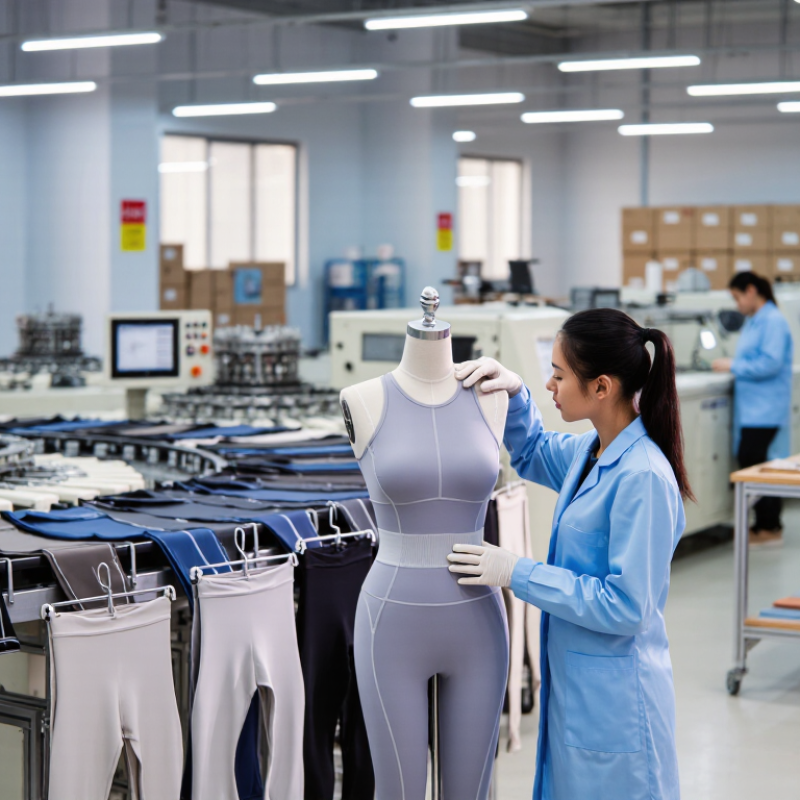
How to Choose a Seamless Leggings Manufacturer in 2026?

Define Your Seamless Leggings Requirements and Target Market

Before selecting a seamless leggings manufacturer in 2026, define the wearer, use case, and target price. Yoga customers may prefer soft, low-compression fabric. Running customers need stronger support, sweat management, and secure waistbands. Studio shoppers may value sculpting panels and a clean, second-skin appearance. Specify size ranges, inseam lengths, rise height, gusset shape, opacity, and compression level. Do not write “high quality” alone. It is too vague.

Fabric decisions should match the market’s expectations and your environmental claims. Textile Exchange’s Materials Market Report 2024 recorded global fiber production at 124 million tonnes in 2023, with polyester remaining the dominant fiber. Ask manufacturers for fiber composition, recycled-content certificates, fabric weight, stretch recovery, and colorfastness results. A useful sample test includes ten squat cycles, repeated stretching, washing, and checking the inner thigh for pilling. Small details matter. A waistband that rolls after one workout can damage repeat sales.

Your target customer also controls minimum order quantities and development costs. A premium studio line may require custom knitting, muted colors, and detailed fit approval. A value-focused collection may need fewer colors and simpler construction. Request a graded size set, not only one sample. Check measurements on real bodies. A neat specification sheet can still be wrong. Review supplier test records, production tolerances, lead times, and corrective-action procedures before placing an order. McKinsey’s sporting goods research indicates that consumers increasingly expect performance, comfort, and value together, so your brief should explain which benefit matters most.

Assess Manufacturer Expertise, Technology, and Production Capacity

How to Choose a Seamless Leggings Manufacturer in 2026?

Manufacturer expertise should appear in the sample, not only in a sales presentation. Ask for the machine gauge, yarn composition, fabric weight, and elastane recovery results. A skilled team should explain how knitting tension controls waist compression and prevents transparent areas during squats. Request graded samples across several sizes. One perfect medium sample proves little.

Technology also affects comfort and consistency. Check whether the factory uses computerized circular knitting, digital pattern control, and inline inspection. Ask to see production records, not just finished photographs.

Textile Exchange’s Materials Market Report 2024 recorded 124 million tonnes of global fiber production in 2023. It projects approximately 160 million tonnes by 2030. This growth increases material pressure and makes waste control more important. Review cutting waste, defective panels, dye-house controls, and recycled-yarn documentation.

Production capacity needs evidence. Compare monthly machine hours, available knitting lines, dyeing partners, quality staff, and peak-season lead times. McKinsey’s State of Fashion 2025 highlights continuing supply-chain volatility, so a factory’s backup plan matters.

Ask for recent on-time delivery data and defect percentages. A low quoted price can hide unstable capacity. I would still test a smaller pilot order before committing. That choice costs more attention, but it exposes weak seams, uneven compression, and delayed communication early. Some evaluations remain imperfect. Human judgment still matters.

Verify Fabric Quality, Product Testing, and Compliance Standards

When choosing a seamless leggings manufacturer in 2026, inspect the fabric before discussing volume. Textile Exchange reported that global fiber production reached 124 million tonnes in 2023. Polyester represented about 57% of output. This scale makes fiber traceability important. Ask for yarn composition, recycled-content evidence, lot numbers, and supplier declarations. Then compare the certificate with the actual fabric roll.

Touch the fabric. Stretch it repeatedly. Check recovery, softness, opacity, and uneven dyeing under bright light. Request testing from an ISO/IEC 17025-accredited laboratory. Useful tests include tensile strength, dimensional change after washing, colorfastness, and pilling resistance. Standards such as ISO 13934-1, ISO 6330, and ISO 12945-2 can support consistent evaluation. Test finished leggings, not only loose fabric samples. Seams and high-stretch zones often fail first.

Compliance needs more than a file in an email. Confirm restricted-substance screening, chemical declarations, and market-specific requirements, including applicable REACH or consumer-product rules. Check the report date, sample description, laboratory identity, and test method. A certificate can be genuine yet irrelevant. That detail is easy to miss. In one practical review, a supplier’s test covered black fabric, while the production order used pale blue fabric. The result looked professional, but the evidence was incomplete. Build approval around production-representative samples, wash trials, and documented corrective actions.

Compare Pricing, Minimum Orders, Lead Times, and Customization Options

Choosing a seamless leggings manufacturer in 2026 requires more than comparing the lowest quote. A low unit price may exclude sampling, tooling, packaging, or shipping. Request a line-by-line quotation covering fabric weight, yarn composition, dyeing, inspection, and payment terms. Compare landed cost, not factory price. I have seen attractive quotes become expensive after revisions. Ask whether the minimum order applies per color, size range, or total style. A 300-piece MOQ sounds manageable, but three colors can quickly create 900 pieces.

Lead time should be measured from approved sample and confirmed deposit, not the first email. Ask for separate dates for prototyping, bulk knitting, dyeing, quality inspection, and dispatch. Build extra days for fabric shortages or failed color tests. Customization also needs precision. Confirm waistband height, compression level, gusset shape, stitching, logo method, labels, packaging, and size grading. Request a physical sample before bulk production. Digital images can hide transparency, uneven tension, or weak recovery. One mistake here can affect every pair.

Tips: Use a comparison sheet for every supplier. Record MOQs, sample fees, revision limits, lead times, defect policies, and reorder terms. Ask for recent production photos and measurable quality records. Check testing for colorfastness, stretch recovery, and seam strength. Start with a controlled pilot order when possible. It may cost more per pair, but it reveals communication gaps early. Do not assume a confident sales promise equals factory capacity. Verify it in writing. Also, leave room for your own mistakes; first specifications are rarely perfect.

Evaluate Communication, Sampling, and Long-Term Partnership Potential

Choosing a seamless leggings manufacturer in 2026 requires more than comparing unit prices. Communication reveals operational maturity. Ask how quickly the team answers technical questions, confirms revisions, and reports production risks. During supplier reviews, I look for named contacts, written specifications, and clear time zones. A vague reply today can become a costly delay during bulk production. Request a sample development calendar with fabric selection, knitting, dyeing, testing, and approval dates. Good communication is measurable.

Sampling should imitate real production, not create a showroom exception. Request the intended yarn blend, waistband construction, gusset shape, stitch density, and color standard. Wear-test the leggings after repeated stretching, washing, and drying. Check opacity during movement, seam recovery, pilling, and waistband pressure. Keep a written defect log with photographs and measurements. One sample may look excellent. That proves very little. Ask whether the manufacturer can reproduce the same result across sizes. I have learned that rushed approvals often hide fit problems. That lesson remains uncomfortable.

Long-term partnership potential depends on consistency, not friendly promises. Review capacity planning, quality records, material traceability, and backup processes for peak seasons. Discuss minimum order quantities, development fees, payment milestones, and change-control procedures before commitment. A reliable manufacturer explains limitations without defensiveness. They may also suggest practical improvements, such as adjusting stitch tension or reinforcing high-stress zones. However, no evaluation is perfect. People change, machinery ages, and forecasts fail. Use a small pilot order, document every agreement, and reassess performance before expanding volumes.

How to Choose a Seamless Leggings Manufacturer in 2026? - Evaluate Communication, Sampling, and Long-Term Partnership Potential

Evaluation Dimension Weight Practical Benchmark Recommended Evidence Assessment Score
(1–5)
Communication Responsiveness 15% Replies to standard business inquiries within one business day and provides complete answers instead of generic quotations. Email records, response-time log, quotation completeness, and assigned account contact. 5
Technical Understanding 10% Can discuss yarn composition, knitting structure, compression level, seamless construction, waistband stability, and common fit risks. Technical questionnaire, construction proposal, fabric specification sheet, and risk assessment. 5
Sampling Process 15% Provides a documented sample-development process covering measurement confirmation, prototype review, revisions, and approval before bulk production. Sample calendar, tech-pack review, revision history, and approval procedure. 4
Sample Accuracy 15% Sample measurements, stretch recovery, opacity, color, logo placement, and workmanship meet the approved specification. Measurement report, stretch-recovery test, color standard, wash test, and approved sealed sample. 4
Material and Product Quality 15% Uses traceable materials and controls pilling, colorfastness, dimensional change, seam strength, and fabric defects. Yarn or fabric lot records, test reports, inspection checklist, and corrective-action records. 4
Compliance and Traceability 10% Maintains documented labor, chemical, product-safety, and supply-chain controls relevant to the destination market. Valid audit documentation, restricted-substance test results, material declarations, and production traceability. 4
Production Capacity and Planning 10% Provides realistic capacity information, production lead times, minimum order quantities, and a clear pre-production approval checkpoint. Capacity plan, production schedule, order calendar, MOQ policy, and contingency plan. 4
Quality Assurance and Inspection 5% Uses documented in-line and final inspections with measurable acceptance criteria and corrective-action procedures. Inspection reports, defect classification, sampling plan, and non-conformance records. 4
Long-Term Partnership Potential 5% Supports forecasting, repeat orders, product improvement, transparent cost reviews, and structured issue resolution. Account-management plan, forecast process, pricing-review policy, escalation path, and improvement proposals. 5
Weighted Evaluation Result 4.35 / 5.00
Decision Guide: 4.25–5.00 indicates a strong candidate for long-term cooperation; 3.50–4.24 indicates a candidate requiring targeted verification; below 3.50 indicates significant commercial or quality risks.

FAQS

What should I define before choosing a seamless leggings manufacturer?

Define the wearer, activity, target price, size range, inseam, rise, and compression level. Yoga users may want soft, low-compression fabric. Runners need stronger support and sweat management. Studio shoppers may prefer sculpting panels and a smooth appearance. “High quality” is too vague.

Which fabric details should I request?

Ask for fiber composition, recycled content, fabric weight, stretch recovery, and colorfastness results. Request supporting certificates when environmental claims are important. Test ten squat cycles, repeated stretching, washing, and inner-thigh pilling. Small failures matter. A rolling waistband can lose customers.

Why should I request samples in several sizes?

One medium sample cannot prove consistent performance. Request a graded size set and measure each garment on real bodies. Check waistband pressure, opacity, inseam accuracy, gusset shape, and recovery. A tidy specification sheet can still contain errors. Fit is rarely perfect.

How can I evaluate a factory’s technical expertise?

Ask about machine gauge, yarn composition, fabric weight, and elastane recovery. The team should explain how knitting tension controls compression. It should also prevent transparent areas during squats. Review production records, not only attractive photographs. Pictures can mislead.

What production-capacity evidence should I review?

Compare machine hours, knitting lines, dyeing partners, quality staff, and seasonal lead times. Ask for recent on-time delivery data and defect percentages. Check backup plans for material shortages and production delays. A low price may hide unstable capacity. Verify promises in writing.

How should I compare manufacturer pricing?

Request a line-by-line quotation for fabric, yarn, dyeing, inspection, packaging, and shipping. Compare landed cost rather than the factory price. Include sampling, tooling, revisions, and payment terms. A low unit price may become expensive later. My own estimates may still be incomplete.

How do minimum order quantities affect purchasing?

Confirm whether the minimum applies per color, size range, or total style. A 300-piece minimum can become 900 pieces across three colors. Fewer colors may suit a value-focused collection. Custom knitting usually needs more development work. Start smaller when possible.

What should I confirm about customization and lead times?

Confirm waistband height, compression, gusset shape, stitching, labels, packaging, and size grading. Measure lead time from approved sample and confirmed deposit. Request separate dates for prototyping, knitting, dyeing, inspection, and dispatch. Leave extra days for failed color tests. Digital images hide problems.

Why is a pilot order useful?

A controlled pilot order can reveal weak seams, uneven compression, and delayed communication. It may cost more per pair, but exposes problems early. Keep a comparison sheet for every supplier. Record revision limits, defect policies, and reorder terms. A spreadsheet is not certainty.

Conclusion

Choosing the right seamless leggings manufacturer in 2026 requires more than comparing basic prices. Start by defining your product requirements, target customers, preferred styles, performance features, size range, and expected order volume. Then assess each manufacturer’s experience, seamless knitting technology, production capacity, quality control systems, and ability to maintain consistent output as your business grows. Fabric quality is equally important, so confirm material composition, stretch and recovery, comfort, durability, colorfastness, and relevant product testing or compliance documentation.

A reliable manufacturer should also offer transparent pricing, reasonable minimum order quantities, realistic lead times, and flexible customization options for colors, patterns, labels, packaging, and fit. Before committing, request samples to evaluate construction, sizing, workmanship, and overall performance. Clear communication, responsive service, and a willingness to solve problems are essential indicators of a dependable long-term partner. By reviewing these factors systematically, you can select a seamless leggings manufacturer that supports product quality, customer satisfaction, and sustainable business growth.

Aurora Bennett

Aurora Bennett

Aurora Bennett is a professional marketing specialist with a strong understanding of product strategy, customer needs, and market trends. As a key contributor to the company’s content and communications team, Aurora regularly publishes insightful articles on the company website, helping readers......