0%

Choosing a supplier for high waist seamless leggings takes more than comparing product photos. Fabric feel, waistband recovery, size consistency, and stitching quality all matter once garments reach real customers. A smooth sample can look convincing under studio lights. It still needs to hold its shape after repeated wear and washing.

This guide introduces ten manufacturers serving the seamless activewear market. It gives buyers a practical starting point for comparing production capabilities, customization options, minimum order quantities, and communication. Some companies may suit emerging labels, while others are better equipped for larger orders. The right fit depends on your product brief, budget, and delivery needs.

No ranking can replace direct supplier checks. Ask for current samples, fabric specifications, and clear information about quality control before making a commitment. Confirm how sizing is measured, and request details about color matching and packaging. Small inconsistencies matter. A waistband that rolls or a size chart that shifts between batches can create costly problems. Manufacturer information also changes, so treat this list as a shortlist to investigate rather than a final endorsement. That distinction is easy to overlook. A careful conversation, followed by a sample review, often reveals more than a polished catalog.
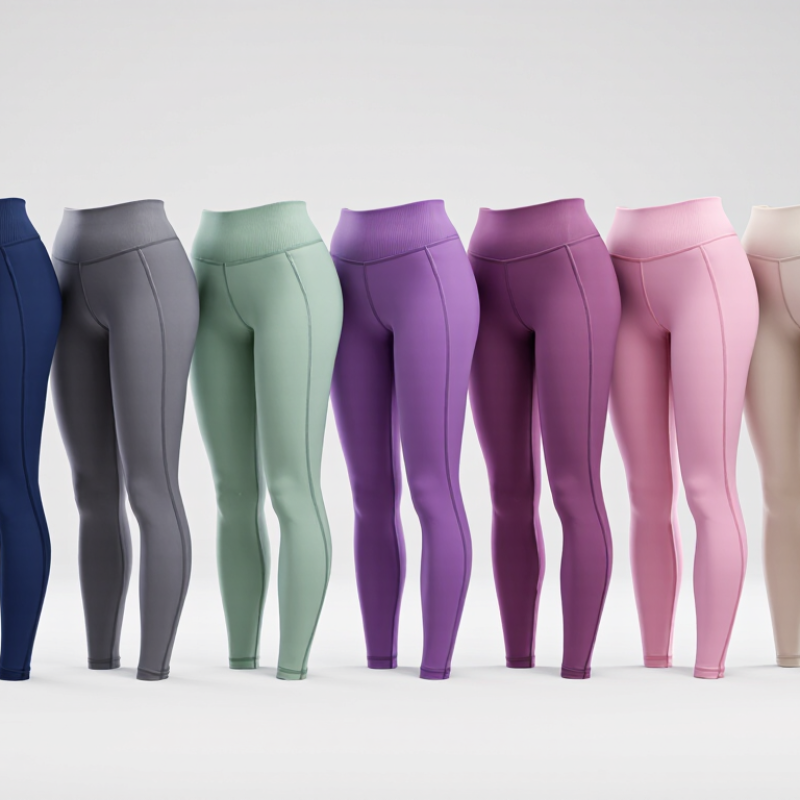
China Top 10 High Waist Seamless Leggings Manufacturers?

How High-Waist Seamless Leggings Are Made: Circular Knitting and Seam Structure

High-waist seamless leggings begin on a circular knitting machine, where needles form a continuous tube rather than separate front and back panels. The machine can vary stitch selection across the tube, creating denser zones at the waist and more flexible areas around the knees. Elastane is often fed alongside the main yarn to improve stretch and recovery. Small changes matter.

The waistband is usually knitted into the garment or formed by folding and securing the upper edge. Although “seamless” suggests no seams at all, many leggings still need a joined crotch gusset or a small linking seam. That area deserves close inspection: uneven stitches can rub during movement. Textile Exchange’s Materials Market Report 2024 estimates that global fiber production reached 124 million tonnes in 2023, with polyester making up about 57 percent. For manufacturers, this scale makes fiber selection and process control consequential, not cosmetic.

A practical quality check includes measuring waistband recovery, checking stitch density, and testing opacity under stretch. Some factories also assess bursting strength and dimensional change after washing. These checks can reveal whether a high-rise panel holds its shape or rolls down after repeated wear. One trade-off remains: stronger compression may improve support, but it can also reduce comfort. The best structure is not always the tightest one.

How to Compare Fabric Specs: GSM, Elastane %, and ISO 20932-1 Stretch Tests

When comparing high-waist seamless leggings, ask manufacturers for fabric specifications and test reports, not just a soft-hand description. GSM measures fabric mass per square metre. It helps compare weight, but higher GSM does not guarantee opacity or support. A dense knit may feel firm, while a lighter knit can still recover well. Check the sample under bright light during a squat test.

Elastane percentage is useful, but it cannot predict fit on its own. Nylon or polyester yarn, knitting structure, and finishing also affect stretch and recovery. ISO 20932-1 provides a strip-test method for measuring fabric elasticity. Compare results only when the test direction, specimen size, and applied force are consistent. Ask for lengthwise and crosswise data, plus recovery after repeated extension. Fabric tests are not the same as testing a finished waistband or garment. That distinction is easy to miss.

Tips: Request the GSM tolerance, fibre-content report, and ISO test conditions. Measure a washed sample, too. I would not rely on one lab result; production batches can vary, and I have seen a promising swatch feel different in a full garment.

How to Verify Durability: ISO 12947-2 Abrasion and ISO 105-C06 Colorfastness

When comparing China’s top 10 high-waist seamless leggings manufacturers, request test reports for the exact fabric and color you plan to order. ISO 12947-2:2016 measures abrasion resistance using the Martindale method, recording cycles until fabric breakdown. A higher cycle count can indicate better resistance, but it does not guarantee years of wear. Seams, stretch recovery, and fabric weight also affect durability. Numbers matter.

For color, ask for an ISO 105-C06:2010 laundering report. It assesses color change and staining under a specified wash procedure; grey-scale grades run from 1 to 5, with 5 indicating the best result. Check that the report lists the test variant, temperature, number of washes, and tested shade. Black leggings may behave differently from pale colors. One shade is not enough.

Tips: Request reports from an independent laboratory, and match the sample’s composition and dye lot to your bulk order. Compare results only when methods match. Then wash and stretch a sample yourself; it is a useful check, though not a substitute for laboratory testing. A polished report can still miss real-life friction at the waistband or inner thigh.

China Top 10 High Waist Seamless Leggings Manufacturers? - How to Verify Durability: ISO 12947-2 Abrasion and ISO 105-C06 Colorfastness

Supplier-neutral checklist for comparing manufacturers. It contains verification criteria and recognized textile test methods, not company rankings or supplier-specific test results. Request reports for the actual fabric, color, and finished product being evaluated.

No. Verification area Relevant standard or method What to verify Evidence to request
1 Abrasion resistance ISO 12947-2 This part of the Martindale method specifies determination of specimen breakdown. Check the reported cycles and the endpoint used. Full laboratory report identifying the fabric, test conditions, number of cycles, and breakdown criterion.
2 Colorfastness to laundering ISO 105-C06 The method evaluates colorfastness to domestic and commercial laundering under specified test conditions. Confirm the procedure used matches the intended care and market requirements. Report showing the selected test procedure, color change and staining assessments, and tested colorway.
3 Colorfastness to rubbing ISO 105-X12 Assesses color transfer by rubbing under the method’s specified conditions. Check dry and wet rubbing results where relevant. Report with dry and wet results and identification of the tested fabric color.
4 Colorfastness to perspiration ISO 105-E04 Evaluates colorfastness to acidic and alkaline perspiration solutions using the specified procedure. Report showing results for color change and staining under the applicable test conditions.
5 Tensile strength and elongation ISO 13934-1 Specifies a strip method for determining maximum force and elongation at maximum force of textile fabrics. Report with specimen direction, maximum force, elongation, and tested material identification.
6 Bursting strength ISO 13938-2 Specifies a pneumatic method for determining bursting strength and bursting distension of fabrics. Report stating the method, results, and whether the tested sample represents the leggings’ stretch fabric.
7 Tear strength ISO 13937-2 Specifies a trouser-shaped test specimen method for determining tear force of textile fabrics. Report identifying specimen direction and tear-force results.
8 Dimensional change after washing and drying ISO 5077, with washing and drying procedures selected as applicable ISO 5077 specifies determination of dimensional change in washing and drying. Check length and width measurements and the procedure used. Before-and-after measurements, calculated dimensional change, and the associated washing and drying conditions.
9 Domestic washing and drying procedure ISO 6330 Specifies domestic washing and drying procedures for textile testing. Confirm the selected procedure is recorded and is appropriate to the care instructions being assessed. Test record listing the washing and drying procedure used, along with the associated evaluation method.
10 Care-label consistency ISO 3758 Provides a code for care labelling using symbols. Compare the proposed care symbols with the garment’s tested care performance and destination-market rules. Proposed care label, test records supporting the care instructions, and confirmation of applicable local labeling requirements.

Important: Test methods describe how testing is performed; they do not by themselves establish a universal pass/fail limit for leggings. Agree on acceptance criteria before testing, and verify that each report is traceable to the submitted fabric or finished garment, colorway, and production lot.

China’s Top 10 Manufacturers: Compare MOQ, Monthly Capacity, and OEM/ODM Data

When comparing China’s top 10 high waist seamless leggings manufacturers, look beyond a polished product photo. MOQ, monthly capacity, and OEM/ODM support affect cost, lead time, and fit consistency. Ask whether the quoted MOQ applies to one color, one size run, or the whole order. That matters. A supplier’s “monthly capacity” may describe total garment output, not available seamless-legging production.

Request comparable figures from every factory. A useful sheet records MOQ per style and color, current production capacity, sample lead time, and bulk delivery time. Ask how many knitting machines are assigned to seamless garments, and whether dyeing and finishing happen in-house. For OEM, confirm options for fabric weight, waistband height, and labels. For ODM, ask to review existing patterns and size charts. Small details count: a waistband that rolls during movement can outweigh a low unit price.

Treat capacity as a planning estimate, not a promise. Ask for recent production records or a factory walk-through, then check how peak-season orders affect timelines. A sample may feel smooth under showroom lighting but behave differently after washing. I would compare at least two sample rounds, even if that slows selection. This part is easy to overlook. MOQ and capacity figures are useful, but clear written specifications make them more dependable.

How to Qualify Suppliers: Review Test Reports, Compliance, Sampling, and QC

When evaluating China-based high waist seamless leggings manufacturers, request current test reports for the exact yarn, dye, and finished fabric being offered. Check the laboratory, test date, sample description, and measured results, not just a certificate image. Useful checks may include colorfastness, fiber composition, stretch recovery, and restricted-substance screening, depending on your market. Reports should be traceable.

Request compliance documents and confirm that the factory details match the production site. Ask who performs testing, how often, and what happens when a result fails. A polished document can still leave gaps. Verify key claims with the testing provider when possible, and keep written records of material or process changes.

Sampling reveals what paperwork cannot. Order a pre-production sample in your target size range, then check waistband roll, seam bonding, opacity under stretch, and recovery after repeated wear and washing. Record measurements before and after laundering. Inspect several pieces. During bulk production, agree on inspection points, defect limits, and corrective actions in writing. Compare the approved sample with randomly selected finished units; small differences are easy to miss on a screen. No checklist removes every risk, so review findings and adjust your criteria as orders grow.

FAQS

How are high-waist seamless leggings made?

Circular knitting forms a continuous fabric tube. Stitch density can vary, creating firmer waist zones and more flexible knee areas. Small changes matter.

Do seamless leggings have any seams?

Many still have a joined crotch gusset or small linking seam. Check this area for uneven stitches that might rub during movement.

What checks can reveal whether a waistband will keep its shape?

Measure its recovery, inspect stitch density, and test opacity when stretched. Washing and movement can also reveal rolling or shape loss. Not every sample behaves alike.

What does an abrasion test tell buyers?

The Martindale method records cycles until fabric breakdown. A higher count suggests better abrasion resistance, but does not guarantee years of wear.

What should a colorfastness report include?

Check the test method, temperature, wash count, and tested shade. Grades range from 1 to 5, with 5 indicating the best result. One shade is not enough.

How can buyers compare factory minimum orders and capacity?

Ask whether the minimum applies per color, style, or full order. Confirm that monthly capacity refers to seamless leggings, not total garment output. Get figures in writing.

What production details should buyers request?

Compare machine allocation, sample lead time, bulk delivery time, and in-house dyeing or finishing. Peak-season schedules can change estimates. Plans shift.

How should buyers assess samples and custom options?

Request two sample rounds if possible, then wash and stretch each sample. Confirm fabric weight, waistband height, labels, and size charts in writing. Showroom feel can mislead.

Conclusion

This guide explains how high waist seamless leggings are made, focusing on circular knitting, yarn selection, and seam construction. It outlines how to compare fabric specifications such as GSM and elastane percentage, and how ISO 20932-1 stretch testing can help assess fit and recovery. It also describes ways to evaluate durability, including abrasion testing under ISO 12947-2 and colorfastness testing under ISO 105-C06.

A comparison of China’s top 10 manufacturers can help buyers consider practical factors such as minimum order quantities, monthly production capacity, and OEM or ODM capabilities. Before choosing a supplier, request relevant test reports, confirm compliance documentation, review sample quality, and understand the factory’s quality-control process. These steps provide a clear framework for assessing product performance and supplier suitability without relying on a single specification or sales claim.

Liam Anderson

Liam Anderson

Liam Anderson is a highly experienced marketing professional dedicated to helping businesses understand how thoughtful strategy, reliable products, and customer-focused service can create lasting value. With a strong command of the company’s product portfolio, industry trends, and evolving customer......