Choosing a private label activewear manufacturer can shape your brand long before customers see your logo. The right partner affects fabric quality, fit consistency, pricing, delivery speed, and customer trust. A weak choice may leave you with uneven stitching, delayed samples, or leggings that become transparent under bright studio lights.
Ben Francis, founder of Gymshark, once said, “You have to be obsessed with your customer and obsessed with your product.” That principle matters when comparing private label suppliers. A manufacturer should understand your customer’s movement, climate, size range, and expectations. They should also explain fabric composition, testing procedures, minimum order quantities, and production timelines clearly.
This guide examines seven private label activewear manufacturers with practical buying criteria. We consider sampling quality, customization options, recycled materials, factory communication, and fulfillment support. Certifications matter, but paperwork alone does not guarantee a reliable partnership. A polished website can hide inconsistent production. That is easy to miss.
Look closely at sample seams, waistband recovery, colorfastness, and label placement. Ask whether the same fabric will remain available next season. Request realistic timelines, not optimistic promises. You may also need to negotiate smaller trial orders before committing to a larger launch.
No manufacturer is perfect. Some offer excellent design support but limited flexibility. Others provide strong pricing but require larger order volumes. The best match depends on your budget, product category, target market, and tolerance for operational risk. These seven options provide a useful starting point, not a substitute for careful verification.
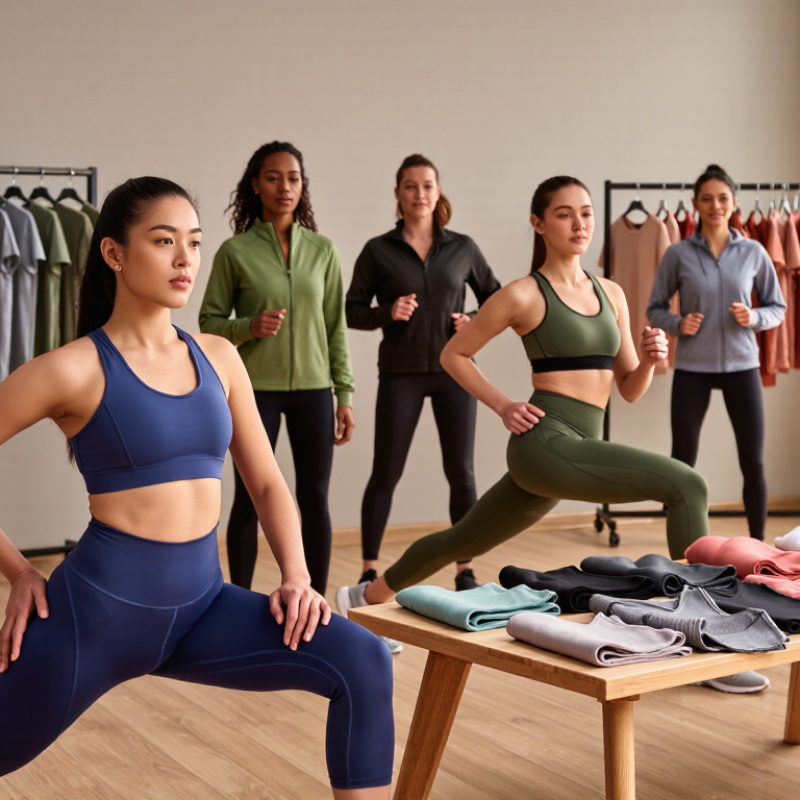
Private label activewear manufacturers provide more than blank leggings or basic sports tops. They help turn a product idea into a repeatable collection. Typical services include fabric sourcing, pattern development, sample making, size grading, custom labels, and branded packaging. Experienced teams can recommend fabrics for compression, moisture control, stretch, and recovery. These details affect comfort after repeated washing.
Manufacturers may also support tech-pack review, color matching, logo placement, and production scheduling. Some offer small-batch production, which helps new businesses test demand before committing to larger quantities. Reliable suppliers should explain minimum order quantities, sample fees, lead times, and payment terms clearly. Quality control may include fabric inspection, measurement checks, seam testing, and final product reviews. Documentation matters too. Ask whether the factory can provide relevant material and production records for your target market.
Tips: Request a physical sample before approving bulk production. Wear it during training, washing, and movement. Check waistband recovery, stitching, transparency, and pocket strength. Keep written approval records. Small details prevent expensive misunderstandings.
No supplier gets every detail right. I once found that a visually perfect sample felt restrictive during deep squats. That issue appeared only after real use. Manufacturers can advise, but buyers must test performance themselves. Compare communication speed, correction policies, and inspection procedures, not only quoted prices. A dependable partner should welcome precise questions and explain limitations without making unrealistic promises.
A practical comparison of common private label activewear manufacturing capabilities, minimum order quantities, lead times, and services.
| Manufacturer Profile | Typical Production Region | Core Product Categories | Typical MOQ | Sample Lead Time | Bulk Production Lead Time | Private Label Services | Common Compliance Evidence |
|---|---|---|---|---|---|---|---|
| Profile 1: Full-Service Performancewear Factory | East and Southeast Asia | Leggings, sports bras, tops, shorts, jackets | 300–1,000 pieces per style and color | 7–15 days | 30–60 days after approval | Pattern development, fabric sourcing, labels, hangtags, packaging | Factory audit reports, restricted-substance testing, social-compliance documentation |
| Profile 2: Low-MOQ Startup Manufacturer | South Asia and Southeast Asia | Basic leggings, crop tops, T-shirts, lounge-activewear | 50–200 pieces per style | 10–20 days | 25–45 days after approval | Small-batch cutting, basic logo application, size labels, folding and packing | Material composition records, basic quality-control reports, production samples |
| Profile 3: Sustainable Fabric Specialist | Europe and Asia | Recycled polyester activewear, organic cotton styles, yoga apparel | 200–800 pieces per style and color | 10–18 days | 35–70 days after approval | Certified fabric sourcing, recycled-content documentation, eco packaging | Global Recycled Standard, Organic Content Standard, OEKO-TEX documentation where applicable |
| Profile 4: Technical Compressionwear Manufacturer | East Asia and Eastern Europe | Compression leggings, running tops, base layers, cycling apparel | 500–1,500 pieces per style | 14–25 days | 45–75 days after approval | Graded patterns, flatlock seams, bonded construction, reflective details | Fabric performance test results, colorfastness testing, dimensional-stability reports |
| Profile 5: Custom Cut-and-Sew Manufacturer | North America and Latin America | Custom tops, bottoms, bodysuits, swim-activewear hybrids | 100–500 pieces per style and color | 10–21 days | 30–60 days after approval | Tech-pack review, custom grading, domestic sampling, small-batch production | Workplace policies, fiber-content labeling records, third-party inspection options |
| Profile 6: Seamless Knitwear Manufacturer | East Asia and Southern Europe | Seamless bras, knitted leggings, bodysuits, training sets | 500–2,000 pieces per design | 15–30 days | 45–80 days after approval | Knit programming, engineered ventilation zones, integrated branding, color development | Yarn composition records, wash-care testing, colorfastness and stretch-recovery tests |
| Profile 7: Large-Scale Export Manufacturer | China, Vietnam, Bangladesh, and Turkey | Complete activewear collections, teamwear, athleisure basics | 1,000–5,000 pieces per style and color | 12–25 days | 45–90 days after approval | High-volume production, assortment planning, quality inspection, export logistics | Social audits, quality-management records, product testing, customs documentation |
Note: MOQ and lead-time figures are typical industry ranges rather than guarantees. Actual requirements depend on fabric availability, design complexity, order quantity, testing requirements, and packaging specifications.
They may offer fabric sourcing, pattern development, samples, size grading, labels, packaging, and production scheduling. Services vary by supplier.
Match fabric performance to the workout. Check stretch, recovery, moisture control, opacity, colorfastness, and abrasion resistance.
Digital drawings can hide shine, bulk, uneven seams, or poor fit. A physical sample shows real construction.
Wear it during squats, running, seated stretches, washing, and drying. Check transparency, waistband recovery, stitching, and pocket strength.
No. Different body shapes can expose weaknesses quickly. Compare fit on several people, if possible.
Options can include pocket placement, waistband height, gussets, stitching color, labels, and compression levels.
Confirm minimum quantities, sample fees, lead times, payment terms, inspection procedures, and defect handling.
Keep written approvals and measurement charts. Request final-fabric samples before bulk production. Small details matter.
Useful checks include fabric inspection, measurements, seam testing, and final product reviews. Ask for relevant production records.
Not necessarily. Compare communication, correction policies, testing, and inspection support. A cheap sample may become expensive later.
Choosing the right private label activewear manufacturer is essential for building a reliable and competitive fitness apparel line. This guide explains what manufacturers typically provide, including product development, fabric sourcing, pattern making, sampling, labeling, packaging, and production support. It also outlines how to evaluate potential partners by reviewing their experience, communication, quality control systems, certifications, lead times, and ability to meet consistent standards.
Special attention is given to fabric performance, garment fit, durability, breathability, stretch, and customization options. The article also compares manufacturing capacity, pricing structures, minimum order quantities, sampling fees, and production timelines, helping businesses understand the total cost of each partnership. By balancing product quality, customization flexibility, order requirements, manufacturing reliability, and long-term scalability, you can identify the best manufacturer for your activewear line and create products that reflect your brand’s style while meeting customer expectations.