Choosing a seamless sports bra manufacturer requires more than comparing prices, catalogs, or attractive product photographs. Global buyers need dependable construction, verified materials, consistent sizing, and production capacity that remains stable during peak seasons. This 2026 guide examines manufacturers through practical purchasing criteria, including fabric recovery, bonding quality, ventilation zones, packaging control, and communication speed.
Bill Bowerman, Nike co-founder and a pioneering sportswear innovator, famously said, “If you have a body, you are an athlete.” That principle still matters. A well-designed seamless sports bra should support different bodies, movement patterns, and training environments. It should feel smooth under a running top, stay secure during repeated jumps, and dry quickly after a demanding session.
Small details reveal manufacturing discipline. Inspect the inner surface. Check whether the underband rolls after stretching. Ask for wash-test records, size-grading samples, and production photographs. A supplier may promise premium nylon, but documentation matters more than polished language.
No ranking is perfect. Factory performance can change with management, staffing, or order volume. Some public claims also remain difficult to verify. Therefore, this selection considers both visible product quality and the quieter systems behind it. These include sample accuracy, quality inspections, ethical sourcing practices, delivery planning, and after-sales support.
For buyers seeking a reliable seamless sports bra manufacturer, the strongest candidates combine technical experience with honest communication. They do not simply sell a fashionable silhouette. They help turn fit, comfort, durability, and brand identity into a repeatable product for international markets.
Seamless Sports Bra Basics: Knitting, Fibers, Support, and Fit
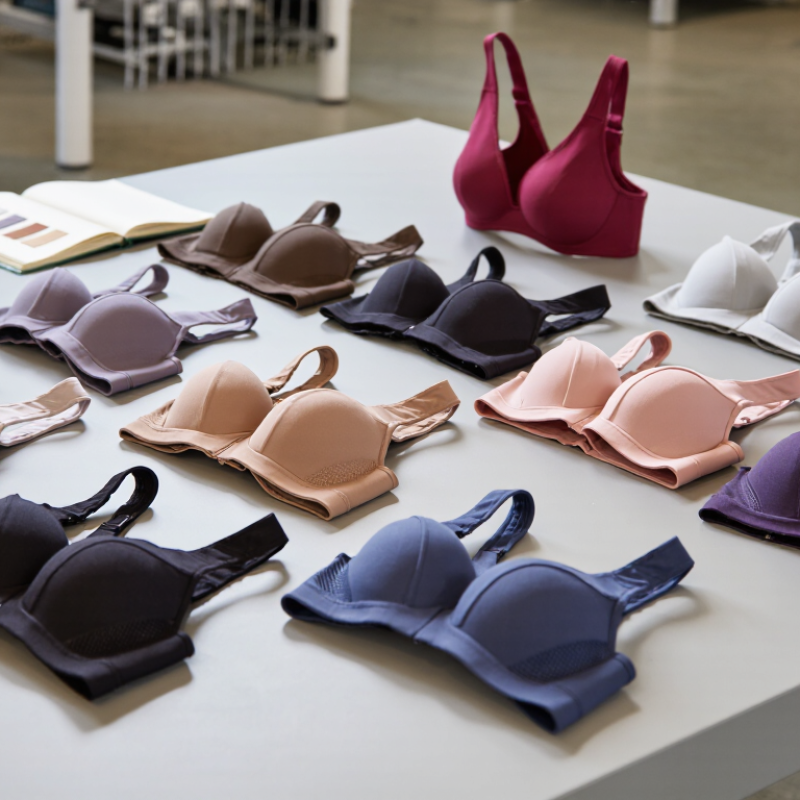
Seamless sports bras are made on circular knitting machines, reducing side seams and bulky joins. The knitting pattern can create ribbed zones, ventilation channels, and targeted compression in one garment. This construction often feels smooth under training tops, but it does not guarantee comfort for every body.
Fiber selection affects performance. Nylon offers a soft hand feel and strong recovery, while polyester usually dries quickly and holds color well. Elastane helps the bra stretch, then return to shape after repeated wear. Recycled fibers can perform effectively, but buyers should request test data rather than trust marketing claims alone. In my experience, fabric weight and recovery matter more than fiber labels alone.
Support comes from more than tightness. A wider underband, stable straps, and dense knitting can improve control during running. However, excessive compression may restrict breathing or create pressure near the ribs. Fit should be checked through arm raises, jumps, and deep bends. Some prototypes look excellent on a mannequin but fail during movement. That mistake deserves attention.
Tips: Ask manufacturers for stretch-recovery results, wash-test records, and size measurements. Request samples in several sizes. Check the underband after repeated washing. It should remain firm, not curl or twist. Also inspect the inside finish, because rough yarn changes can cause chafing during long sessions.
2026 Manufacturer Screening: MOQ, Capacity, Lead Time, and AQL 2.5
For global buyers, seamless sports bra screening should begin with measurable production facts. Textile Exchange’s Materials Market Report 2024 estimates global fiber production reached 124 million tonnes in 2023. That scale increases pressure on yarn availability and factory planning. Ask for the exact MOQ by color, size range, and development stage. A quoted MOQ of 500 pieces may exclude custom yarns or extra dye lots.
Capacity must be verified, not admired on a presentation slide. Request monthly output records, machine counts, and current utilization. Lead time should separate sampling, lab-dip approval, bulk knitting, sewing, and final inspection. In practical sourcing, 45–75 days may be realistic for a new seamless program. Reorders can be faster. Sometimes, they are not. Yarn shortages and approval delays still disrupt schedules. Under ANSI/ASQ Z1.4, AQL 2.5 defines a sampling plan, not a promise that 2.5% of goods are defective. Confirm lot size, inspection level, and defect classification. Critical defects should normally be zero.
Tips: Request one recent inspection report and one capacity record. Check whether the report matches the proposed facility. Test stretch recovery after washing, not only appearance. Record measurements at the bust, underbust, and strap zones. A small pilot order may reveal more than a confident factory tour. Disclosure quality is also evidence of supplier reliability.
2026 Top Seamless Sports Bra Manufacturers for Global Buyers - 2026 Manufacturer Screening: MOQ, Capacity, Lead Time, and AQL 2.5
Anonymous manufacturer screening benchmark for global sourcing decisions
| Screening ID |
Primary Production Region |
Core Product Capability |
MOQ
(Style / Color) |
Estimated Monthly Capacity
(Pieces) |
Sample Lead Time
(Days) |
Bulk Lead Time
(Days) |
AQL 2.5
Inspection Basis |
Typical Materials |
Compliance Documentation |
Custom Label / Packaging |
Buyer Suitability |
| SMB-01 |
East Asia |
Seamless circular-knit sports bras with bonded finishes |
300 / 100 |
150,000–220,000 |
7–10 |
35–45 |
Major defects ≤ 2.5%; critical defects 0 |
Nylon, recycled polyamide, elastane |
Material test report, colorfastness, needle inspection |
Available |
High-volume programs |
| SMB-02 |
South Asia |
Light-support seamless bras for private-label collections |
500 / 150 |
80,000–140,000 |
8–12 |
40–55 |
General inspection at normal severity |
Polyester, nylon, elastane blends |
Fiber composition, azo-dye, dimensional stability |
Available with setup fee |
Mid-size brands |
| SMB-03 |
Southeast Asia |
Medium- and high-support seamless activewear with removable cups |
1,000 / 250 |
120,000–180,000 |
10–14 |
45–60 |
AQL 2.5 for major defects; zero tolerance for critical defects |
Recycled nylon, elastane, molded foam cups |
Factory social audit, restricted substances testing |
Available |
Performance collections |
| SMB-04 |
East Asia |
Fine-gauge seamless bras with jacquard structures and engineered zones |
800 / 200 |
60,000–110,000 |
12–16 |
50–65 |
AQL 2.5 with measurement and stretch recovery checks |
Nylon 6.6, elastane, moisture-management yarns |
Performance testing, wash-care validation, chemical compliance |
Available |
Technical products |
| SMB-05 |
South Asia |
Cost-efficient seamless basics with standard color and size grading |
300 / 100 |
50,000–90,000 |
7–10 |
35–50 |
AQL 2.5 visual and measurement inspection |
Polyester, nylon, elastane blends |
Basic quality report, colorfastness and composition tests |
Available |
Entry-level programs |
| SMB-06 |
Southeast Asia |
Seamless maternity and nursing sports bras with flexible support zones |
600 / 150 |
40,000–75,000 |
12–18 |
50–70 |
AQL 2.5 plus functional component inspection |
Soft nylon, elastane, breathable spacer fabric |
Nickel-free component declaration, wash testing, social compliance |
Available with approval |
Specialty collections |
| SMB-07 |
Eastern Europe |
Short-run seamless production for regional replenishment orders |
150 / 50 |
20,000–45,000 |
10–15 |
30–45 |
AQL 2.5 final random inspection |
Nylon, recycled polyester, elastane |
EU chemical compliance documentation and fiber testing |
Available |
Low-MOQ buyers |
| SMB-08 |
North Africa |
Nearshore seamless basics and replenishment manufacturing |
250 / 100 |
35,000–70,000 |
8–12 |
35–50 |
AQL 2.5 with buyer-approved inspection checklist |
Polyamide, polyester, elastane |
Composition, colorfastness, dimensional stability |
Available |
Regional replenishment |
Screening note: Capacity, MOQ, and lead-time figures are indicative 2026 sourcing benchmarks for anonymous manufacturer profiles and should be confirmed through factory audits, approved samples, purchase-order terms, and pre-shipment inspection. AQL 2.5 refers to the maximum acceptable quality limit for major defects under the agreed sampling plan; critical defects should remain at zero.
Top Manufacturer Profiles: Certifications, Export Markets, and Technology
2026 Top Seamless Sports Bra Manufacturers for Global Buyers
A reliable manufacturer profile should show more than attractive samples. Check ISO 9001 for quality systems, OEKO-TEX certification for tested materials, and GRS documentation for recycled fibers. Verify certificate numbers and validity dates independently. Some suppliers display outdated documents. That deserves attention.
Experienced factories usually explain their seamless knitting capacity, gauge options, and production controls clearly. Advanced equipment can create zoned compression, breathable panels, and reduced seam irritation. Digital sampling may shorten development time and reduce fabric waste. Ask whether fit testing includes movement, washing, and repeated stretching. A beautiful showroom proves little.
Tips: Request a complete sample pack. Include test reports, size charts, fiber content, and packing details. Compare production samples, not promises.
Export experience also matters. Manufacturers serving North America, Europe, Australia, and the Middle East should understand labeling, carton marks, shipping documents, and destination requirements. Ask for anonymized export references and typical lead times. Strong suppliers explain inspection stages before shipment. Still, even capable factories can miss color consistency or elastic recovery during busy seasons. Build approval checkpoints into the purchase agreement. That small step can prevent expensive surprises.
Global Compliance Standards: REACH, CPSIA, OEKO-TEX, and ISO 9001
2026 Top Seamless Sports Bra Manufacturers for Global Buyers
Global buyers should treat compliance as a production process, not a marketing phrase. A seamless sports bra may touch skin for hours, so material control matters. REACH requirements help manage restricted chemicals in fabrics, dyes, elastics, and finishing agents. Manufacturers should review updated substance lists and retain supplier declarations. Testing only one sample is not enough.
CPSIA requirements are important for products sold in the United States. Buyers should check applicable limits for lead, phthalates, labeling, and product traceability. An independent laboratory report can support these checks. OEKO-TEX certification may provide additional screening for harmful substances in textile components. However, certificates have scopes and expiry dates. Read them carefully. Small details matter.
ISO 9001 focuses on the manufacturer’s quality management system. It can support controlled purchasing, documented inspections, corrective actions, and batch records. Ask for evidence, not only a certificate copy. Request test reports linked to the exact fabric, color, size range, and production batch. During factory evaluations, inspect seam recovery, bonded edges, odor, stretch consistency, and wash performance. These details reveal practical experience. No factory is flawless, and a polished audit cannot replace ongoing checks. A useful compliance plan should include pre-production review, random testing, and corrective-action records. That approach is less convenient, but more reliable for global orders.
Buyer Scorecard: FOB Cost, Incoterms, Sampling, and ISO 2859-1
2026 Top Seamless Sports Bra Manufacturers for Global Buyers
A useful buyer scorecard starts with landed-cost discipline, not attractive catalog photos. Record the quoted FOB cost, currency, minimum order quantity, and packaging assumptions. FOB can work for sea freight, but it does not cover every transport route. Ask suppliers to compare FOB with FCA, CIF, or DAP when your shipment uses air or multimodal transport. A low FOB price may hide expensive cartons, weak export packing, or inconsistent fabric recovery.
Sampling should test more than appearance. Request pre-production samples in several sizes and colors. Measure chest stretch, strap recovery, cup alignment, seam strength, and wash performance. Keep one approved sample with signed measurements. It becomes a physical reference during bulk inspection. Sampling takes time. That delay is usually cheaper than correcting 5,000 poorly fitted units.
ISO 2859-1 can structure acceptance sampling for bulk orders. Agree on inspection level, lot size, sample quantity, and AQL before production starts. Separate critical, major, and minor defects in writing. Check shade variation under controlled lighting, then inspect stitching, labels, odor, and carton counts. I have seen buyers focus heavily on AQL while ignoring measurement tolerance. That is a gap. A garment can pass a sampling plan and still fit badly if the specification is vague. Record inspection photos, test reports, and corrective actions. Supplier responses matter as much as the first inspection result. Reliable manufacturers explain failures clearly and show measurable improvements.
2026 Top Seamless Sports Bra Manufacturers for Global Buyers
Buyer Scorecard: FOB Cost, Incoterms, Sampling, and ISO 2859-1
Indicative FOB Cost
US$3.50–8.00
Typical planning range per piece for bulk seamless sports bras, excluding special trims and complex customization.
Common Incoterms
FOB / FCA
FOB is used for sea or inland-waterway shipments; FCA is suitable for any transport mode.
Sampling Lead Time
7–14 days
Indicative development time for a standard sample after artwork, measurements, and materials are confirmed.
Typical MOQ
300–1,000 pcs
Planning range for one color or style; actual minimums vary with yarn, dyeing, and customization.
The chart shows ISO 2859-1 single-sampling sample sizes under General Inspection Level II, normal inspection, by lot size. Sample size is determined by the lot-size code letter and inspection level; AQL is then used to determine acceptance and rejection numbers.
FAQS
Circular knitting machines reduce side seams and bulky joins. Ribbed zones, ventilation channels, and compression can be knitted directly into one garment.
Nylon feels soft and recovers well. Polyester dries quickly and holds color. Elastane helps the fabric stretch and return to shape.
Not automatically. Request stretch, recovery, and wash-test data. Fiber labels alone do not prove durability.
A wide underband, stable straps, and dense knitting can improve control. Excessive tightness may restrict breathing or press against the ribs.
Test arm raises, jumps, and deep bends. Watch for shifting bands, pressure points, and exposed skin. A mannequin cannot predict movement.
Confirm MOQ by color, size range, and development stage. Request monthly output records, machine counts, utilization, and separate lead-time stages.
It can be realistic for a new program. Yarn shortages, approvals, and lab testing may extend it. Reorders may be faster, but not always.
It defines a sampling plan, not a guaranteed defect rate. Confirm lot size, inspection level, and defect categories. Critical defects should normally be zero.
Check chemical screening, applicable market requirements, textile safety reports, and quality-system records. Verify certificate scope and expiry dates. A certificate copy is not enough.
Measure the bust, underbust, and strap zones again. The underband should stay firm without curling or twisting. Rough inner yarns may cause chafing. A small pilot can reveal uncomfortable mistakes.
Conclusion
This guide presents a practical framework for evaluating a seamless sports bra manufacturer in 2026. It explains how seamless knitting methods, fiber selection, support levels, and ergonomic fit affect comfort, durability, and performance. Buyers will also learn how to screen suppliers by minimum order quantity, production capacity, lead time, and AQL 2.5 quality expectations. Manufacturer profiles are assessed through certifications, export experience, and manufacturing technology, helping global buyers compare capabilities with greater confidence.
The article also reviews key compliance considerations, including REACH, CPSIA, OEKO-TEX, and ISO 9001, while emphasizing responsible product development and transparent quality control. A buyer scorecard covers FOB pricing, Incoterms, sample evaluation, communication, and ISO 2859-1 inspection practices. By combining technical, commercial, and compliance factors, this resource helps brands and distributors identify reliable manufacturing partners and make informed sourcing decisions for seamless sports bras in international markets.